Wednesday 16 September – A Blue Plaque Tour of Gloucestershire: Poets, Pioneers and Performers – Andy Meller
Once again, our first speaker of the new programme year was the ever entertaining Andy Meller, who took us on a blue plaque tour of Gloucestershire, starting in Gloucester and touring all around the county.
Andy explained that his interest in blue plaques had first arisen when he realised that he’d been walking past two blue plaques in Cheltenham almost every day, erected for John Maskelyne, a magician and inventor, who invented the “penny-in-the-slot” locks seen on public toilets, and had never noticed either of them.
The tour he took us on covered 300 years, 11 individuals of whom 10 were natives of Gloucestershire, and comprised 9 men and 2 women, which reflects the current split of blue plaques in general.
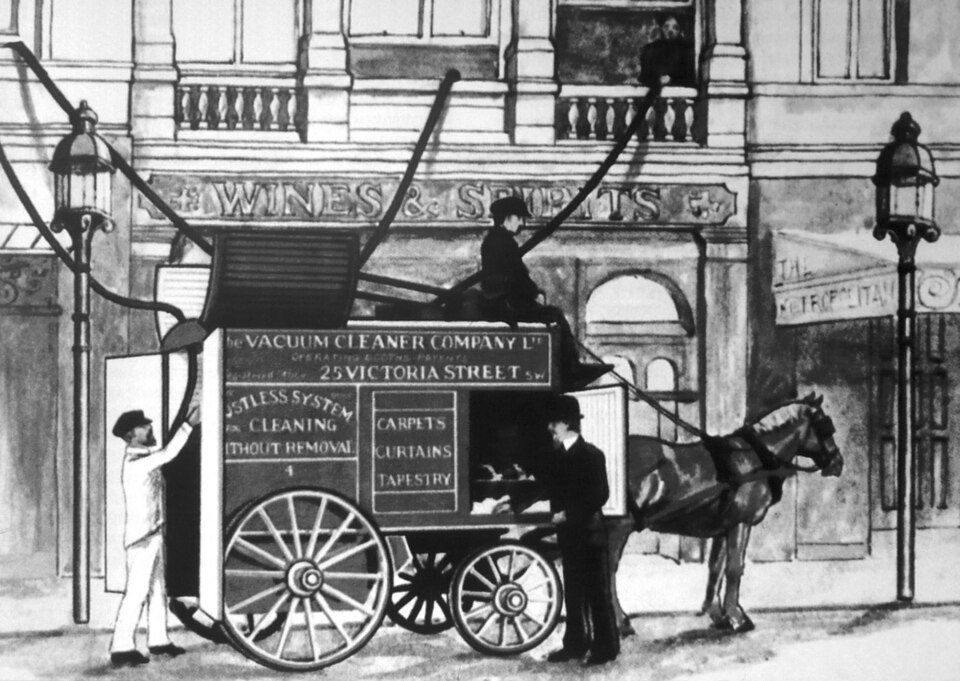
We began with Hubert Cecil Booth, born and educated in Gloucester, whose plaque is on Park House off Spa Road in Gloucester. Booth, an engineer was the inventor of the first vacuum cleaner in the early 20th Century. It was a massive horse drawn cart, powered by an internal combustion engine and instead of buying the appliance, Booth’s customers bought the cleaning service. The machine would remain in the street outside while the huge hoses were dragged into the house for cleaning.
There were no brushes in this early machine, only large suction hoses. Booth was often in trouble for the noise it made and was accused of frightening horses in the street. The turning point came when he was asked to clean Westminster Abbey for the coronation of Edward VII in 1902. Booth set up the Goblin Company to manufacture and refine his products and although they ultimately lost out in the market to Hoover, the original British Vacuum Cleaner Company brand still exists today.
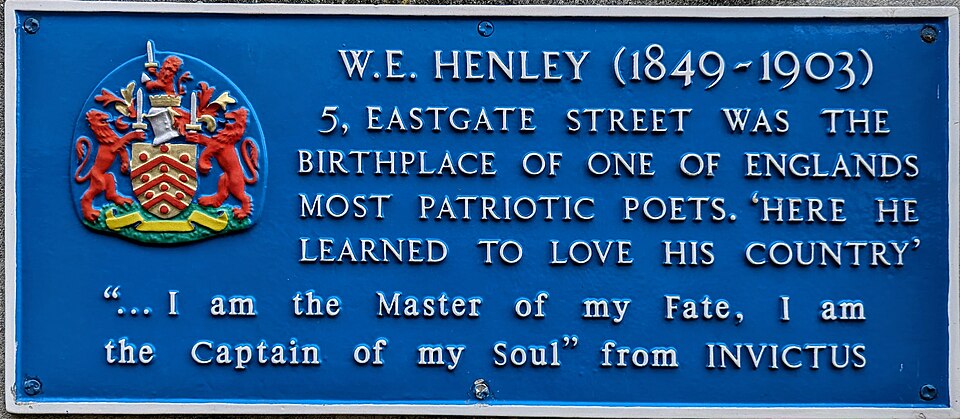 Our second stop in Gloucester was on Eastgate Street towards The Cross where there is a plaque to William Ernest Henley, who was born there in 1849. Henley had a leg amputated at the age of only 12 due to TB of the bone. He was a talented poet and writer, with much of his poetry inspired by his struggles against his illness, including his best known work “Invictus” (“unconquered”), written when he was in his 20s.
Henley was a large man with unruly hair and beard, and with his one leg and crutch he is said to have inspired the character of Long John Silver on meeting Robert Louis Stevenson, author of Treasure Island. There is a bronze bust of Henley in St Paul’s Cathedral.
Next, we made our way to the Forest of Dean where there is a plaque in Market Square on the birthplace of Joe Meek, the “Telstar Man”. Meek was born in 1929 and is best known as the composer of the Tornados instrumental hit tune “Telstar” in 1962, which topped both the US and UK charts and was the first US number one from a British Group. Meek received no royalties from the song due to a dispute over plagiarism, which was resolved in his favour three weeks after his death.
He had a studio in London and was considered a pioneer of early space age and rock music. Meek suffered from lifelong mental health issues and had a morbid fascination with death and seances. In 1967 he shot his landlady and then committed suicide. He is buried in Newent.
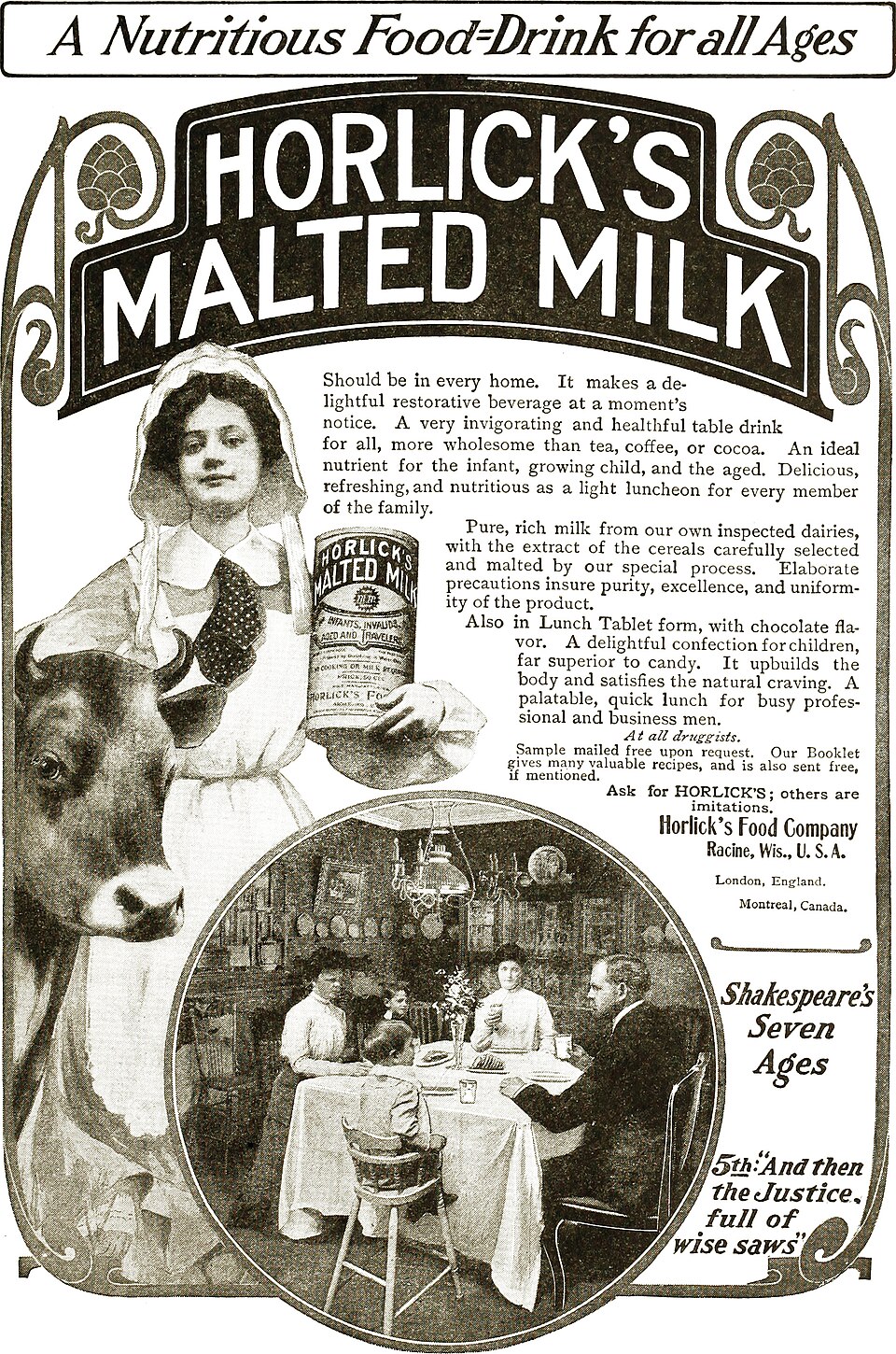
James and William Horlick, two brothers whose surname would become a household word were born at Ruardean House, where their blue plaque can be found. They created the Horlicks malted milk drink in 1873 using what was said to be a family recipe. Originally intended for infants and invalids, it rose to fame after its use on polar expeditions – including those of both Amundsen and Scott – and during both World Wars when Horlicks tablets were issued to the military.
The brothers initially had to go to the US for funding but returned to the UK in 1906, buying a factory in Slough. Horlicks is still made in the UK today.
Moving on to Dursley, we find a plaque on the Methodist Chapel where George Whitefield preached. Born in Gloucester in 1714 (where he has a second plaque) he was ordained but as he was not assigned a Parish he became an itinerant preacher. He preached both in England and in the US, often to very large crowds, and is said to have preached on Minchinhampton Common – traditionally on Whitefield Tump – to upwards of ten thousand people. He is considered to be one of the founders of the Methodist movement.
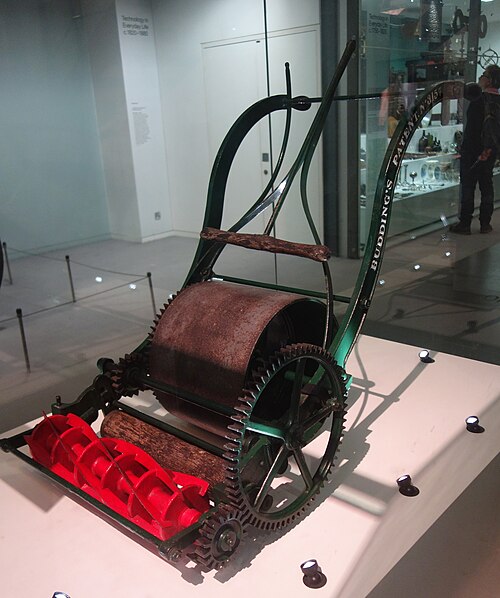
Arriving in Stroud we visit Stroud Brewery where there is a plaque to Edwin Budding, the inventor of the lawn mower. Edwin, born in the Stroud area in 1796, first had the idea for the lawn mower when he saw a nap cutter in a local woollen mill, trimming the rough nap from the cloth to give a smooth finish. Working with John Ferabee from Thrupp Ironworks he produced a machine in 1830, with a rotating cylinder blade to cut grass, the principle of which is still familiar to us today. He is buried in Dursley. Stroud Brewery makes an organic pale ale named after him!
Grace Haddow, born in South Cerney in 1875, is commemorated by a plaque in Sheep Street, Cirencester. She attended Oxford and achieved a degree, but being a woman was not allowed to collect it, as women were not formally members of the University at that time. She was a member of the Suffragist movement and later became a founder member and vice chair of the Women’s Institute. In this role she was responsible for introducing “Jerusalem” as the anthem of the W.I. in 1924.
Travelling on to Winchcombe, we find a plaque to our earliest personality in this journey, Christopher Merrett, herbalist, physician, scientist and early member of the Royal Society, born in 1614.
Merrett was a plant collector, compiling one of the earliest lists of the flora and fauna of England. He was also interested in glass-making and is credited with the first mention in a written document of adding sugar to wine to make a sparkling drink. Thus, he could be said to have invented the “method champenoise” earlier than the French did!
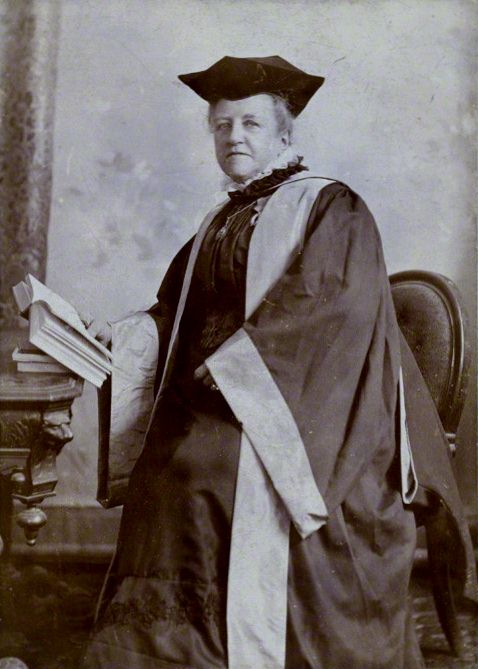
Moving down the road to Cheltenham we find a plaque in Montpelier to Dorothea Beale, one of the most famous educationalists of the 19th century and by any account an extraordinary woman. Born in 1831, she was lucky that her father took an interest in educating his daughter as well as his sons, and she started her career as a mathematics tutor.
In 1858 at the age of only 27, she was chosen from over 50 candidates to be Head of Cheltenham Ladies’ College, which was then a struggling college short of money. She spent the rest of her life in Cheltenham and by the 1880s she had transformed the College, which had moved to new buildings of its own and had over 500 pupils. She was also responsible for founding the institution at Oxford that ultimately became St Hilda’s College, originally intended to train women teachers. She died in 1906 and her ashes were interred in Gloucester Cathedral.
Returning to Gloucester we then heard the tale of James “Jemmy” Wood, known as the Gloucester Miser. Born in Gloucester in 1756, he inherited a Gloucester Bank, which he ran from his draper’s shop in Westgate Street. Today the building is McDonalds, and his blue plaque is on the wall outside.
Popular legend says that Wood was the inspiration for the Dickens character Ebeneezer Scrooge, and reportedly his coffin was stoned at his funeral.
We ended our journey around the county with Samuel Bowly, who seems to have been the antithesis of Wood. Born in Cirencester in 1802, he was a Quaker, known for his honesty, integrity and charitable giving. He was originally a cheese factor by trade.
He was also an abolitionist and a temperance advocate and campaigned tirelessly for the end of slavery. His blue plaque can be seen on the house where he lived in Park Road, Gloucester.
A fascinating journey exploring the lives of people who were largely unknown to most of us previously, it underlines the point that it’s well worth seeking out blue plaques and discovering the stories behind them.
(All images used in this write-up are in the public domain via Wiki Commons)
Wednesday 22 July – Guided Walk of Bisley
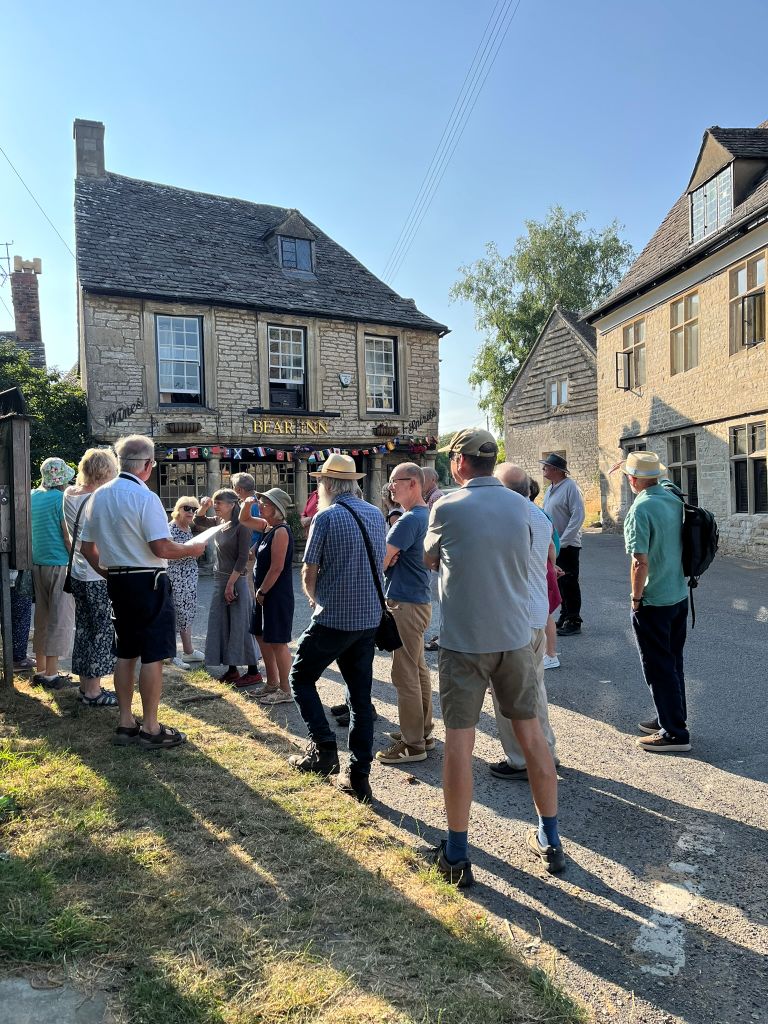
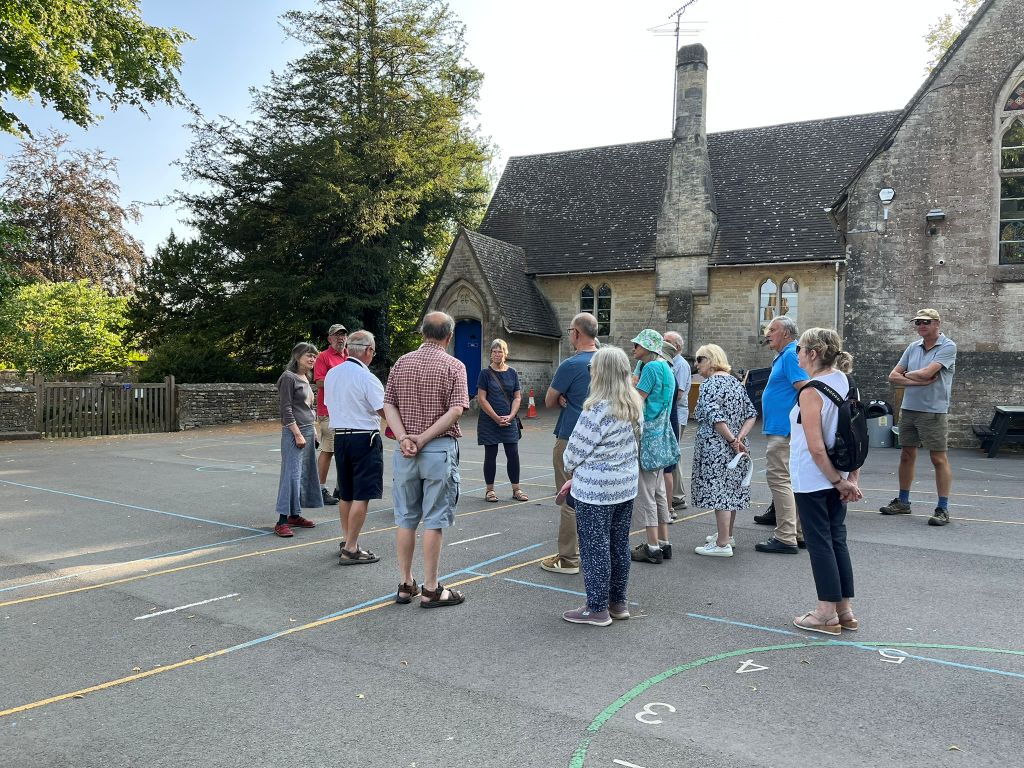
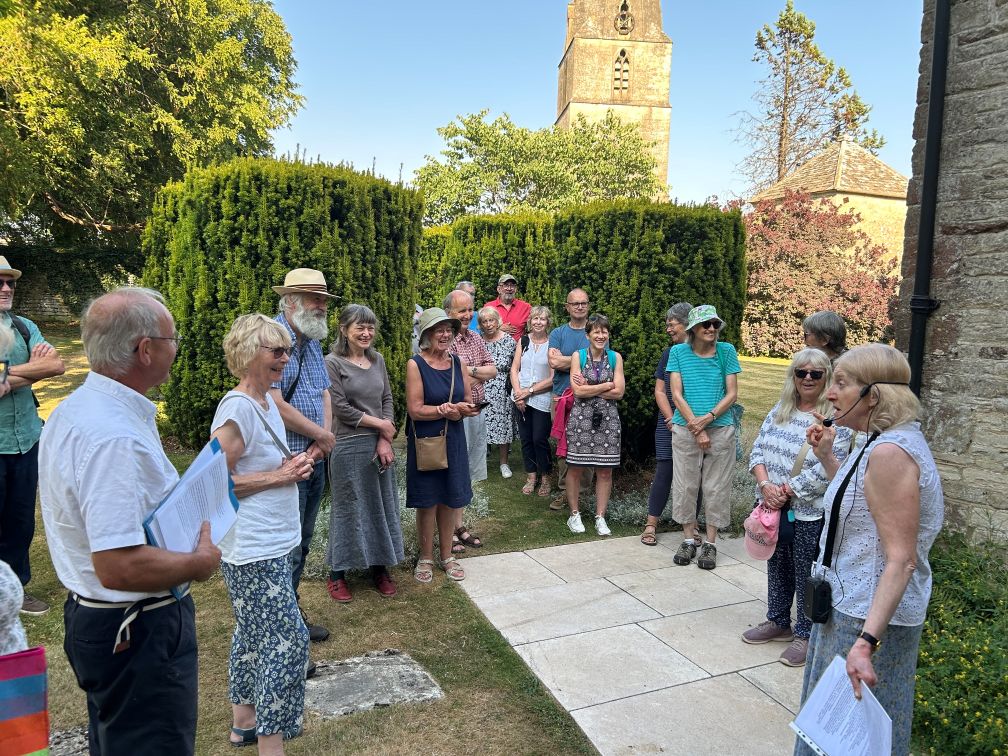
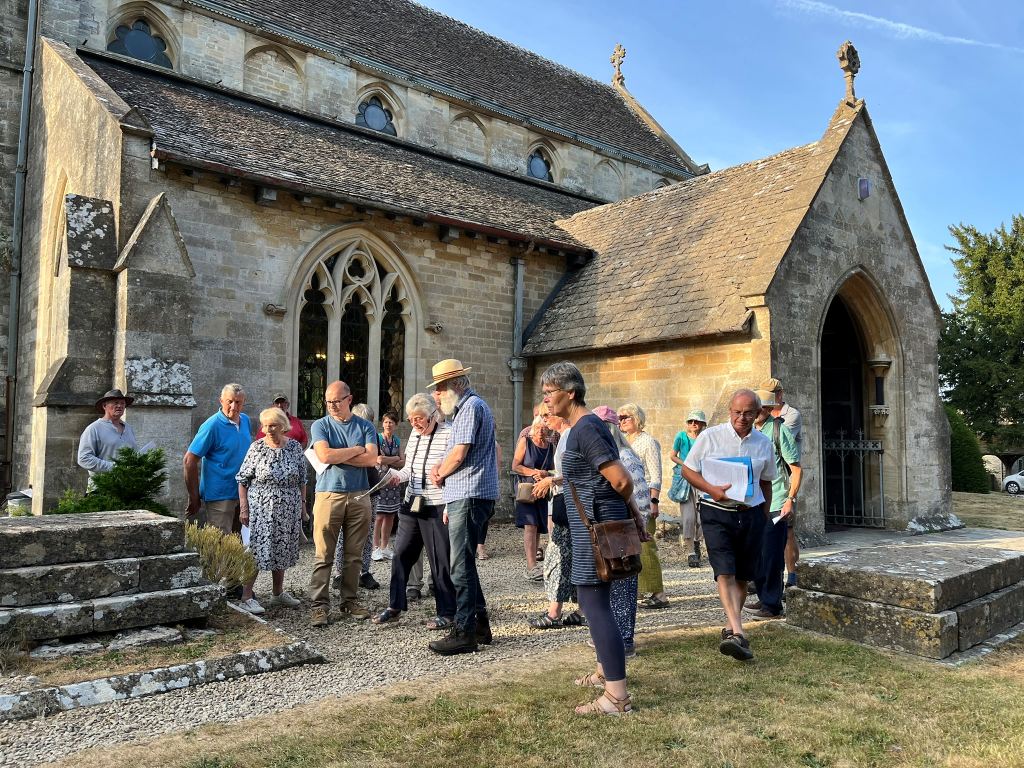
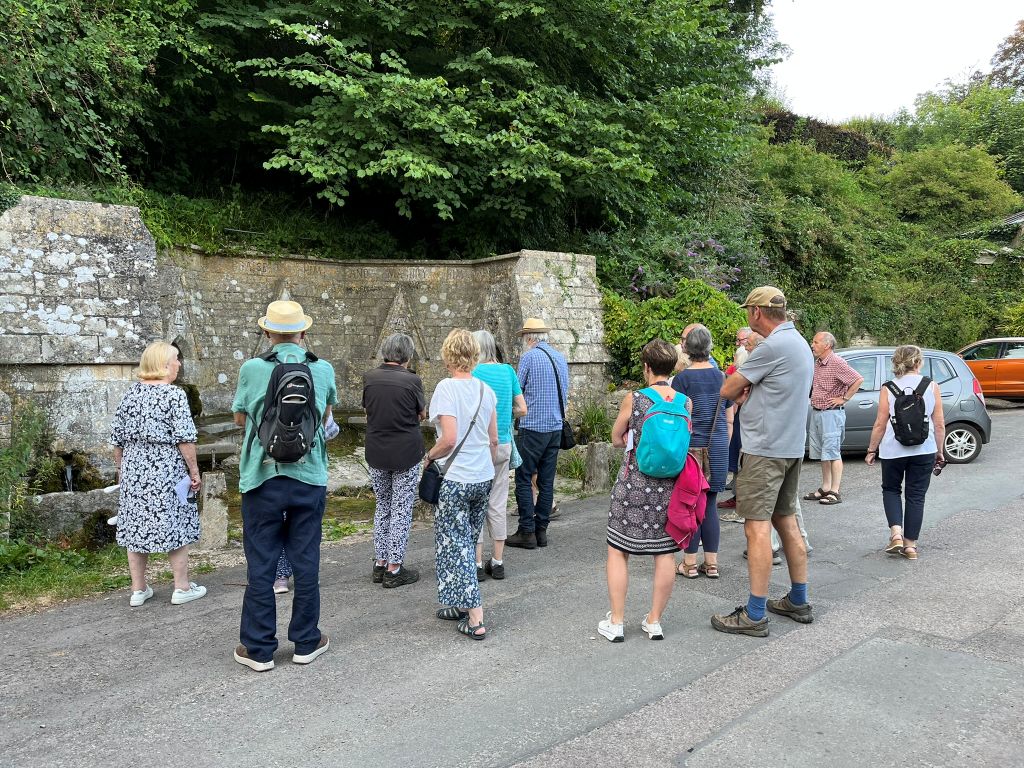
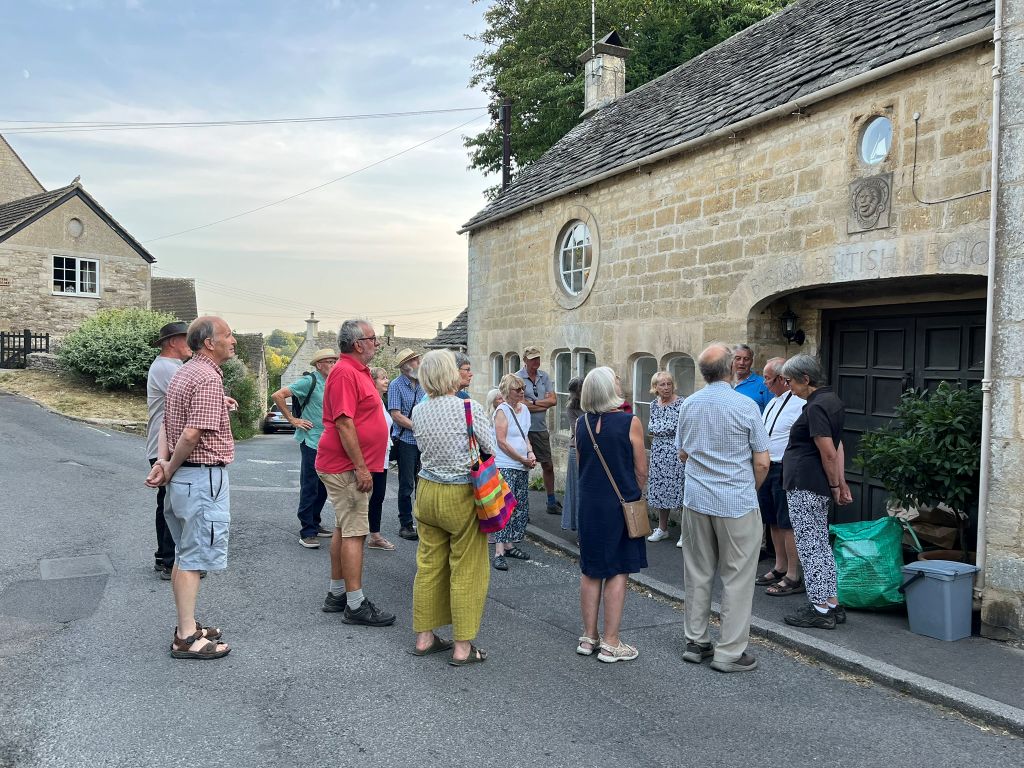
A small group of members enjoyed a guided walk of Bisley on a beautiful Summer evening, in the company of Ashley Dickenson of Bisley History Group and a number of other local volunteers. Starting at the Village Hall we made our way past the Bear Inn and the primary school, and then had a most interesting tour of gardens and exterior of Over Court. Moving on, we then had a tour around the interior of the church and on to the churchyard. Leaving the churchyard down the steep steps we made our way to the Wells and then back round into the High Street, stopping on the way to look at numerous interesting buildings, former shops, pubs and workshops. We finished in George Street at the site of the old village lock-up.
Our thanks to Ashley and his volunteer helpers and to the Cowen family of Overcourt for a fascinating evening. A few photos from the evening are shown below.
Wednesday 17 June – Malmesbury Abbey – Tony McAleavy
Malmesbury Abbey
A good crowd on 17 June in the Church Rooms to hear Tony McAleavy, author of Malmesbury Abbey 670-1539: Patronage, Scholarship and Scandal, talk about some of the stories he uncovered while writing the book, and explain the important role that Malmesbury played in early English history.
Tony began by showing us a beautiful painting of the ruins of Malmesbury Abbey by J.M. Turner, which you can see at the Athelstan Museum in the town. The museum is well worth a visit if you have the opportunity (see link at the end), but for those who can’t get there easily, this link will take you to the picture.
The original religious community is thought to have been founded in the seventh century by Maeldub, an Irish monk, but it was established as a Benedictine Monastery in 675 by Abbot Aldhelm, who was a Prince of Wessex and is sometimes called England’s first writer. The Kings of Wessex chose Winchester as their Royal seat and previous kings had been buried there. Malmesbury is thought to have been chosen for the resting place of Athelstan, first King of all England, as it was on the border of the Saxon kingdoms of Wessex and Mercia and therefore represented his status as “A King for all England.” There was also the attraction of being buried at the same site as the relics of Aldhelm and, apparently, Athelstan himself had personally requested to be laid to rest there.
The monastery survived the early Viking incursions but over time it had evolved into a community of married priests until it was effectively re-founded in the 960s by King Edgar as part of a network of Benedictine Monasteries and granted extensive lands.
By the time of the Norman Conquest, Malmesbury was already building up what would become one of the great medieval libraries of England until it was dispersed at the dissolution. Link here Malmesbury Medieval Library — Malmesbury History Society
After the Conquest, Matilda the wife of William I became a patron of the Abbey, and a second Matilda, wife to Henry I, also took a close interest, appointing William of Malmesbury as Abbot. William, believed by some to be the greatest English historian of the twelfth century, wrote the Gesta Pontificum Anglorum (Deeds of the Bishops of England) in 1125 – see library link above for more details.
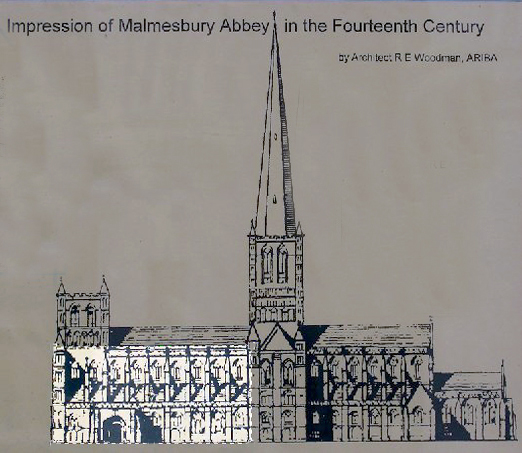
The abbey church was rebuilt by the Normans, with the earliest buildings remaining above ground today dating from the 1120s, comprising only about one third of the medieval monastery. This drawing, which shows both the spire and the tower demonstrates how today’s partly ruined Abbey compares with the medieval building at its height, with only the white highlighted area remaining today.
The medieval Abbey was largely built by Bishop Roger of Salisbury and includes the magnificent South Porch (below right), the door of which is surrounded by sculptures of bible scenes. The west front was said to be similar, but nothing of it now remains.
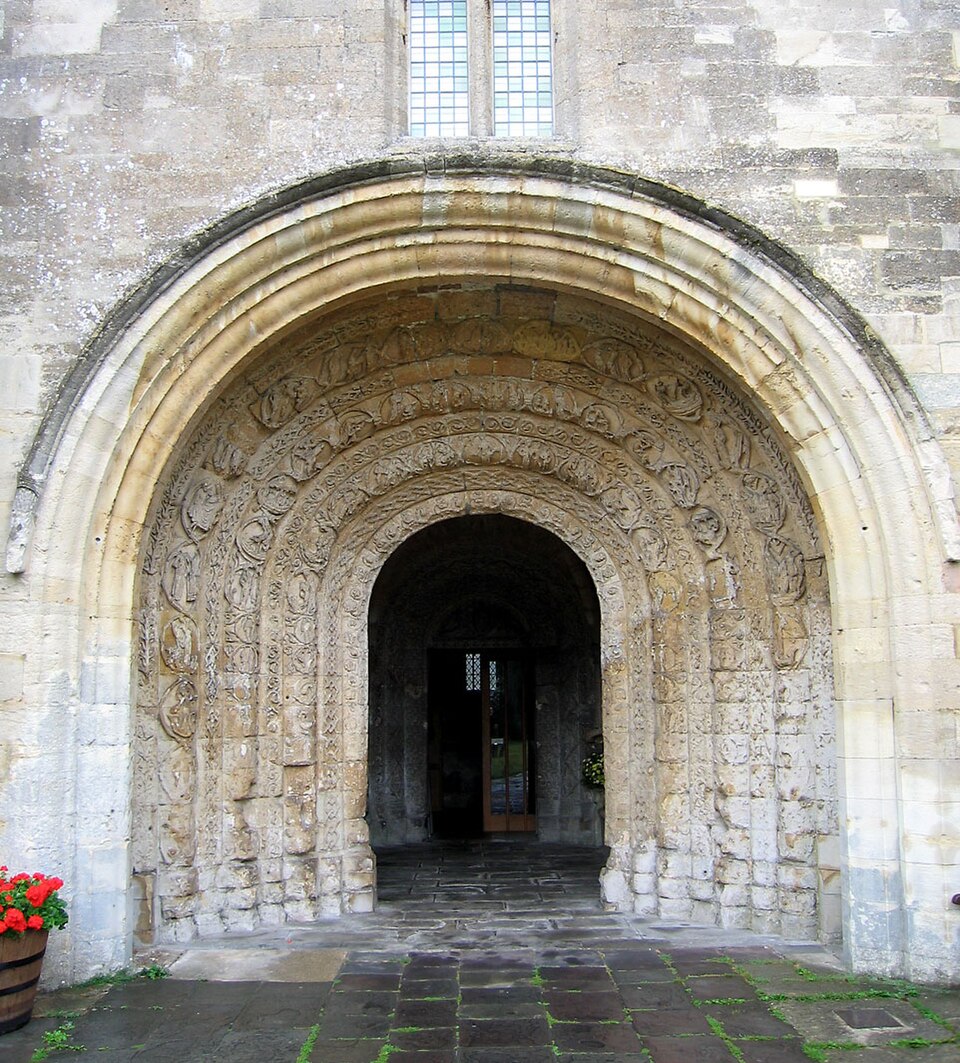
Andrew Dunn under CC-SA 2.0
Next door to the Abbey was a castle, probably where the Old Bell Hotel stands today. It was purchased by the monks in the early 13th century and demolished to build a guest house on the site. This is the origin of the present day hotel’s claim to be the oldest existing hotel in England, “Welcoming guests since 1220.”
Between 1320 and 1350 the Abbey roof was raised, replacing the old wooden roof with a stone one. This was probably carried out using money gifted by Hugh Dispenser who left £10,000 with John of Tintern.
John, who was the Abbot, was a man surrounded by scandal. He is said to have gone on the run with his lover, having first arranged for her husband’s house to be burned down with him inside it. See link below for more on John’s scandalous life of crime.
Thomas of Bromham, a Malmesbury monk in the mid-fourteenth century is now generally recognised as the author of Eulogium Historiarum, a historical chronicle in Latin covering the period from the creation to 1366. See library link above for more details.
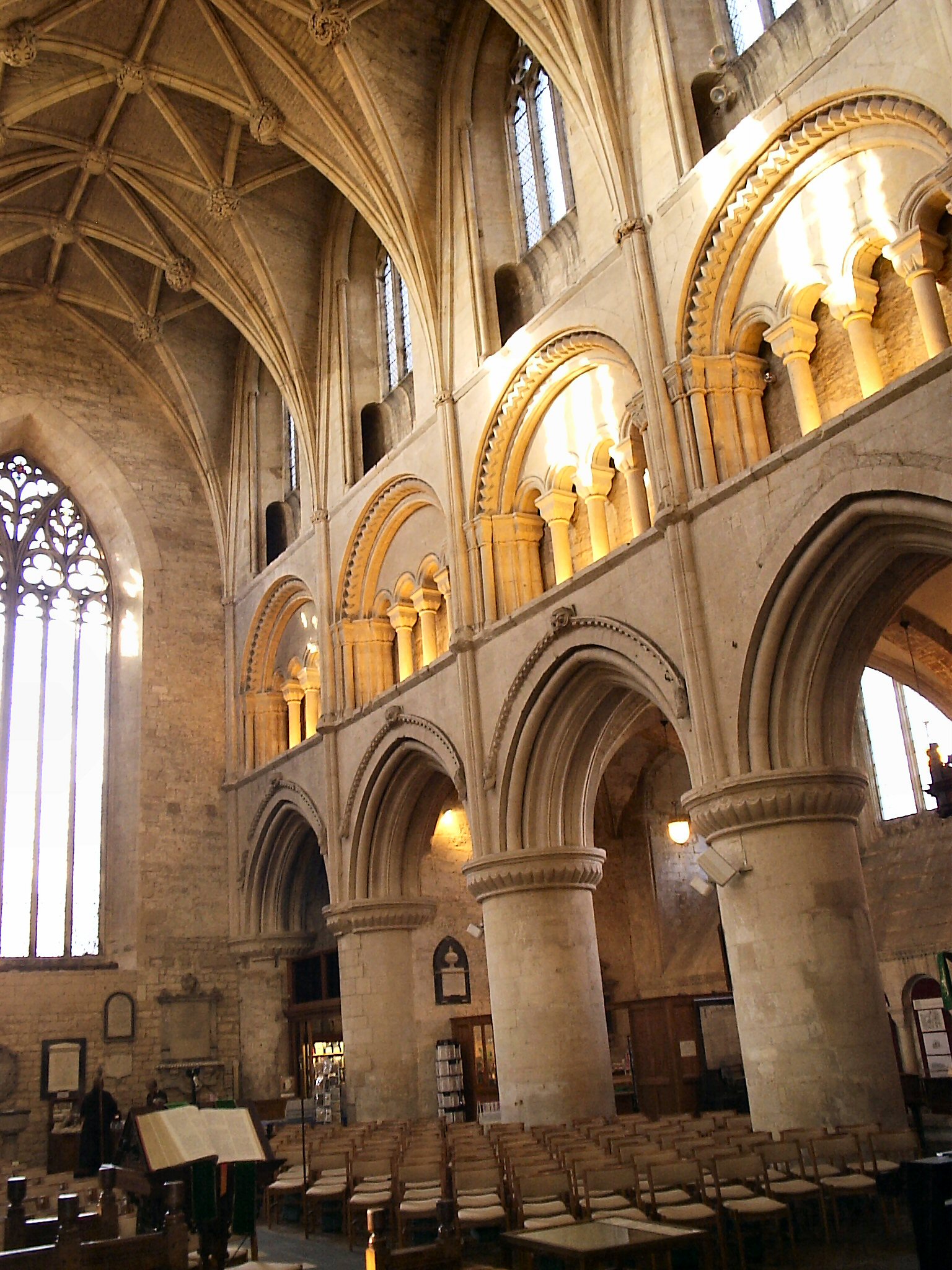
R.N. Marshman under CC-SA 3.0
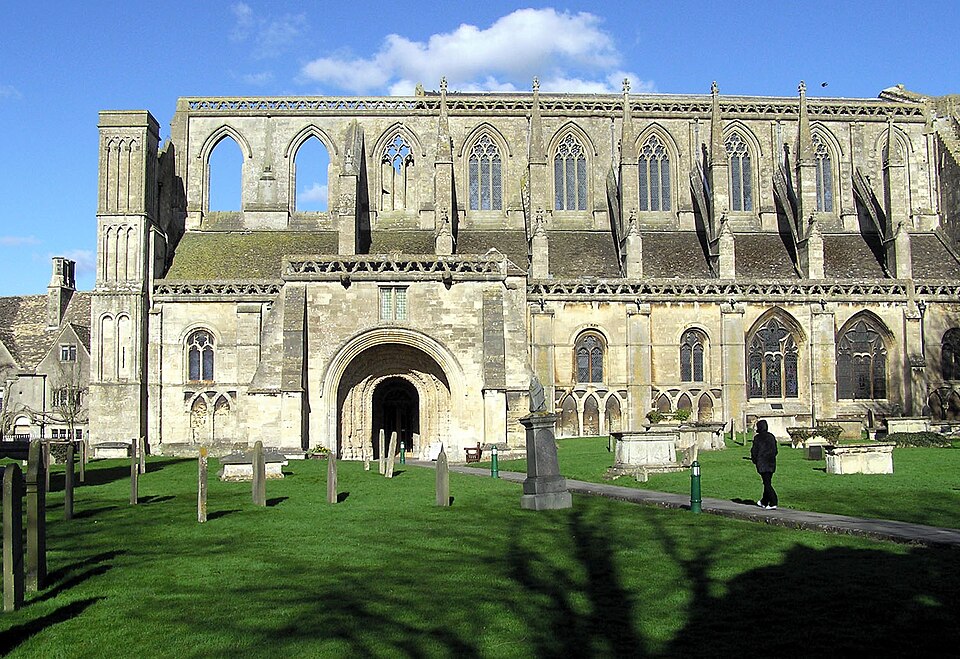
A further building programme was instituted by Abbot Walter of Camme, who added a tower and the west window in the late fourteenth century (as shown in the drawing above). He was also probably responsible for the spire – said to have been taller than that of Salisbury – which fell down, along with much of the west end of the building, in the late fifteenth century after being struck by lightning. He probably commissioned the effigy of Athelstan that lies on top of his tomb. Athelstan does not actually lie inside, as his remains are believed to have been lost during a previous rebuilding programme.
The Abbey’s final years were turbulent ones, with a riot in 1527 when armed monks threatened the Abbot and freed two monks from the Abbey prison. An inspection followed, which was said to have uncovered serious moral weakness.
This of course gave Thomas Cromwell, Henry VIII’s chief minister, the excuse he needed to move against the community, and the Abbey was finally closed as part of the dissolution in 1539. The site was purchased by William Stumpe who gifted it to the town as a replacement Parish Church, a role that it retains to the present day.
Links for further reading
Athelstan Museum – Capturing our history in Malmesbury, Wiltshire
Discovering Malmesbury’s ‘gangster’ medieval monk – BBC News
Eilmer The Flying Monk – Athelstan Museum
Wednesday 20 May – The Bisley Path – Chas Townley
A very good turnout on Wednesday 20 May to hear Chas Townley talk on the subject of the Bisley Path.
There are many theories about the so-called Bisley Path, a route running from Cirencester to Gloucester via Bisley and Painswick, which is thought to date back to ancient times. One popular folk story which Chas outlined for us, is that King Charles I used the route (or part of it) to get his troops to the siege of Gloucester during the Civil War.
Chas then outlined work done over a number of years (since the 1960s) by other researchers, notably Christopher Cox, on tracing the path and its possible history and origins. You can find the links to articles by some of these researchers at the end of this write-up.
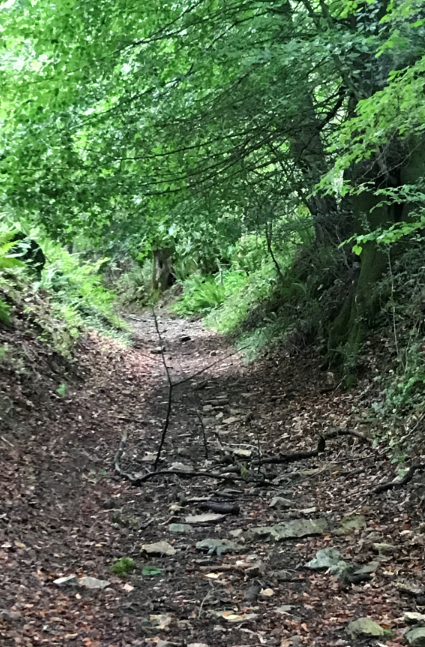
He then showed us the route the path is thought to have taken over some 30km, crossing 4 different streams, the Frome, the Holy Brook, the Slad Valley and the Painswick Brook. The bridge where it crosses the Slad valley at Steanbridge is first recorded in the 1200s and believed to date back even further. We also saw a cross section along the route showing how the height varies (you can see this cross section in the first of the links below). Christopher Cox originally speculated that the road may have had Roman, or even earlier, origins. The path continued as a packhorse way, but when the turnpikes came in the eighteenth century, only parts of the path were incorporated into the new roads, as much of it was unsuitable for wheeled traffic as it was too steep or narrow.
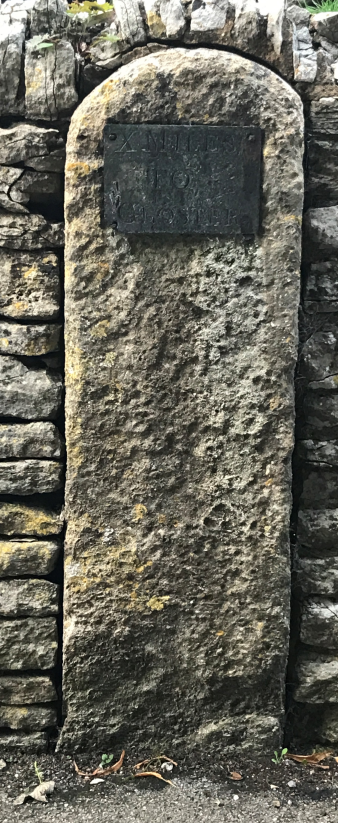
There is an interesting series of milestones along or near to the route of the path, giving distances from Cirencester or Gloucester and Chas showed us photos of some of these. Probably the best known locally is that in George Street, Bisley. The second and third links below give more photos and a suggested route for the whole path with milestones marked. There was also originally a toll house at the edge of Cirencester Park, which was still there in the 1960s and was surveyed at the time by Christopher Cox but has now effectively vanished.
The route was moved out of Cirencester Park when it was turnpiked in the early 1800s and it is now difficult to trace the exact original route within the park although there is one possible ‘hollow way’ which could be its remains. It was pointed out by one of the audience that there is still a ride in the Park today sometimes known as the Bisley Path.
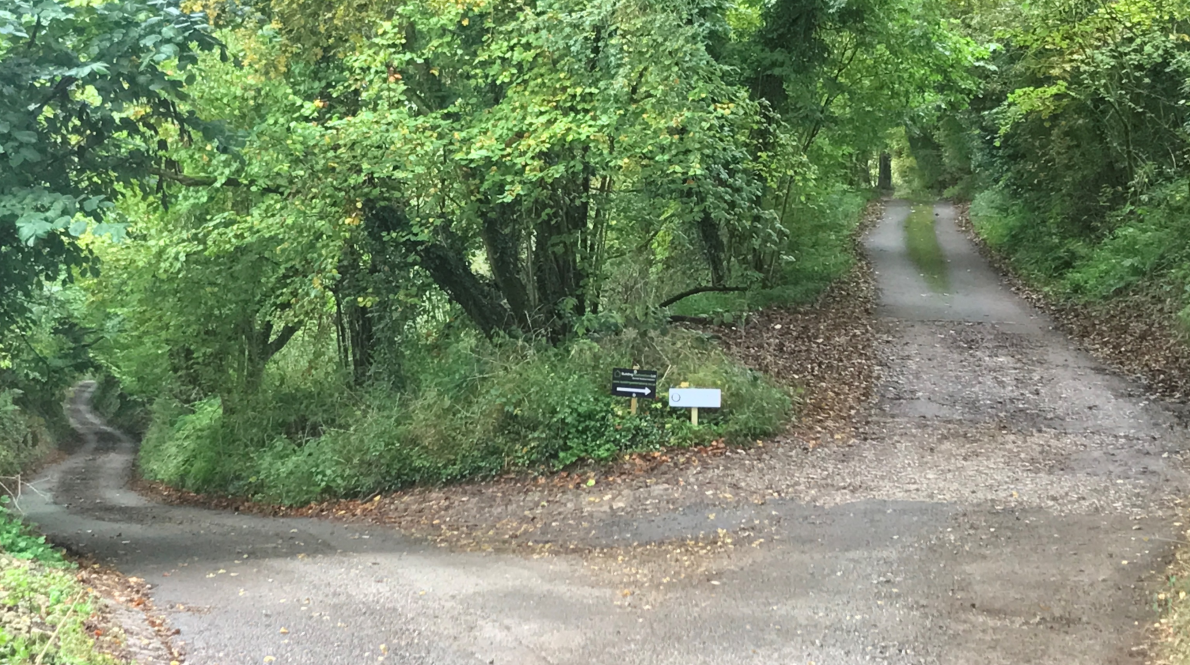
Chas also speculated (using maps and photos) that the original route might have been changed in several other places. One of these is at Tunley, where a more direct route would have been along what is now just a farm track to Tunley Farm rather than down the steep hill into the valley and back up again which is the route of the present day road to Waterlane.
Returning to the folk story of the King Charles and his Cavalier troops, Chas has gone back to look at dates and sources to try to trace exactly where the Army was. The King was in Berkeley on the 8 August 1643 and then moved to Painswick, where he spent the night before traveling on to Gloucester. According to Chas, different accounts give different places and dates for various parts of the Army and also indicate that not all the Army was in one place. Despite part of the path near Steanbridge still being known locally as King Charles Lane, Chas believes that the story is unlikely to be completely true. It’s certainly difficult to imagine artillery being able to negotiate some of the steeper parts.
In conclusion, whatever its actual origins and regardless of the truth or otherwise of the King Charles story, the Bisley Path remains a fascinating enigma and also an excellent walking route, well worth further exploration.
Links for further reading
Christopher Cox, The Bisley Path – an ancient road from Corinium to Glevum? (GlosDocs 1991) – gh199102.pdf
Christopher Cox, Milestones of the Stroud District, Transactions BGAS 1964 bg083119.pdf
The Bisley Path Stones, Goegraph – a page with milestone photos and a possible “route” for the path The Bisley Path Stones (Geograph)
John C. Milner, A Medieval road to Cirencester, Issue 15 of Glevensis (1981), Link to download full journal Glevensis 1981 – Issue 15 – GlosArch
Rev Peter Minall, Painswick roads ancient and modern, The Painswick Chronical, (1997) History – Painswick Roads
Wednesday 15 April – Schools in Chalford Parish (Part 1) – Roger Carnt, Hilary Burgess, Jim Bocock
In this talk subtitled ‘The Happiest Days of Your Life?’, three committee members presented their research into the various means of education in the Chalford Parish prior to Word War 2.
Roger started with a brief outline of the educational opportunities before the building of the National Schools in the 1840s. Education for the poor was through Dame Schools, mainly funded by the Church or by local charities set up by wealthy clothiers such as Ridler’s or Ballinger’s charities. Money was given for teaching stipends (some examples from the charity account books were shown), use of buildings, purchase of books, etc. Photos of two houses in France Lynch (Hap Cottage and the Vicarage) known to have been used as Dame Schools were also shown.
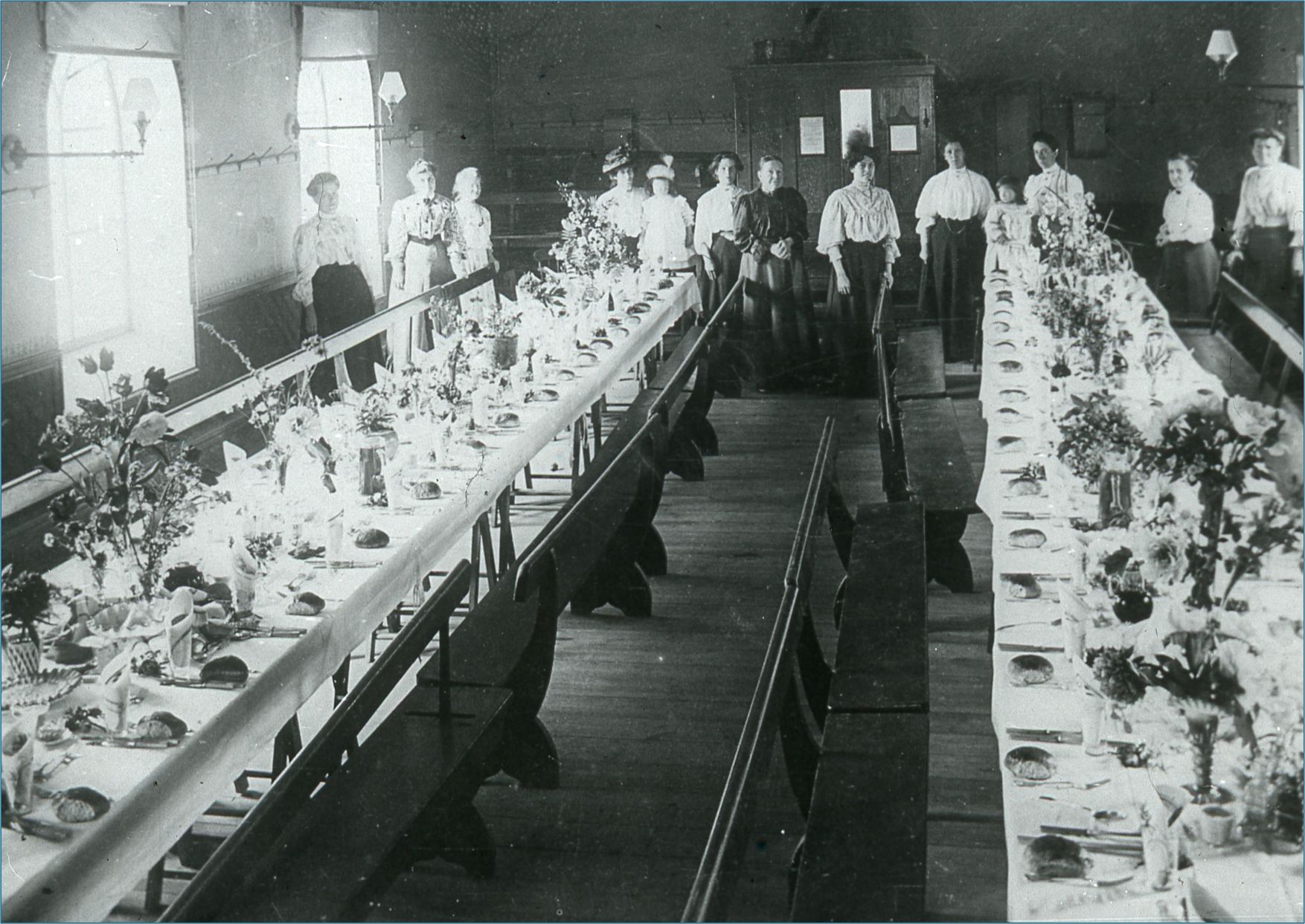
Sunday school also played an important part in early education. In 1880, 441 children were being taught in Sunday schools across Bisley Parish, with probably similar numbers in the non-conformist equivalents. A number of photos of Sunday school ‘treats’ or outings were shown.
The Parish also had several private schools for children of the better off classes. In the 1840s the Innell sisters ran a private girls’ school in Skiveralls House. Bussage House of course was a boys’ school run by John Sibree from the 1860s and later a girls’ school run by Dorothea Beale. Burcombe House in Chalford was run as a school for middle class boys in the 1870s, with both boarders and day pupils.
Roger then covered a few key legal dates in English education. From 1870, elementary education (ages 5-13) had to be provided locally and attendance was made compulsory in 1880. However, as fees were not abolished until 1891, there was (as we shall see later), a lot of absence among the poorer classes! The school leaving age was raised to 11 in 1893, 12 in 1899, and 14 (with no exemptions allowed as they had been previously) in 1914. Although a proposal was made to raise it again to 15 in 1937, it was not implemented until after the War.
Each of the speakers then presented a section on one of the Parish Schools.
Roger started with Bussage School. Built in 1848 as a National School on donated land and with grants and subscriptions from various sources, it always maintained its strong connections with the Church, even after it came under the control of the Local Education Authority in 1903. In the 19th century the reports from HM Inspectorate were often critical of the poor condition of the buildings and the uneven standard of teaching – a common problem for local schools as we shall see.
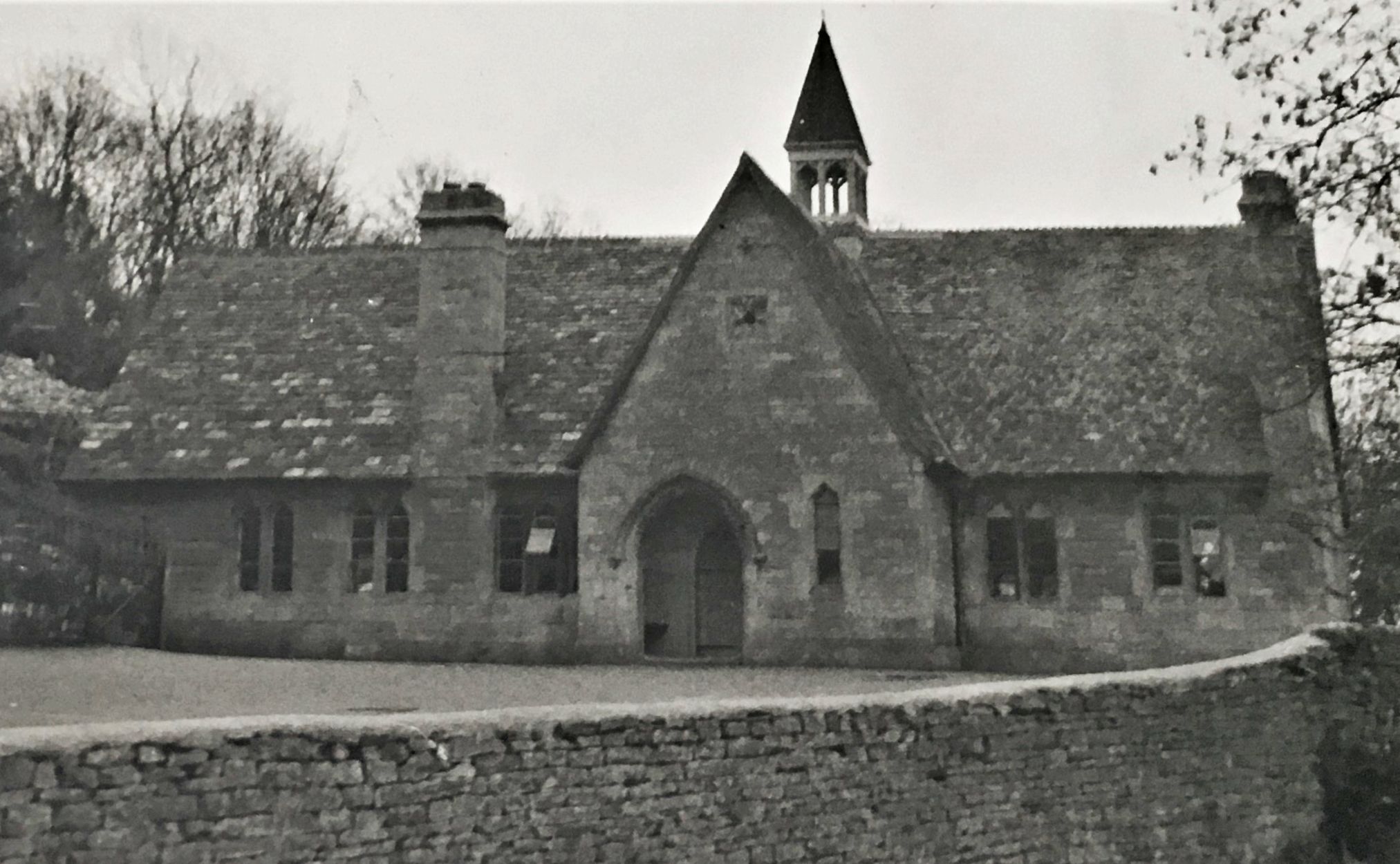
Roger recounted a story taken from the school logbooks in 1897 – held by Gloucestershire Archives, these are a fascinating source for all our local schools – that graphically demonstrated the power of the local Bussage Vicar. A new headmaster, Mr Gwynne-Philips had come to the school and in his first week, he and his wife only attended church on one evening as they were busy fetching their furniture and sorting out their accommodation. The vicar, Rev N.D. McLeod, had apparently commented that their conduct was ‘disgraceful’.
The Head wrote an account of this in the log book – quite against all protocol, but fascinating to read today – and the vicar added a note to say that he objected to the comment as it was not true – ‘I did not say what is imputed of me’. Gwynne-Phillips responded that it was quite true as the vicar had, ‘ordered me to church.’ Clearly not a happy relationship, and this headmaster only lasted three months before resigning over another row about excessive church attendance being required for the children (three times in one week!). His successor lasted only six months before rowing with McLeod over the payment of his salary. HMI commented rather dryly that ‘a double change of headmaster has naturally affected the quality of work.’ Later the school found some stability with a good head, but it is a graphic demonstration of how one or two characters can affect a small school and we will see more of this below.
Hilary then spoke about France Lynch National School, formerly located in the very building the audience was currently sitting in. She showed a fascinating plan from Glos Archives detailing the original layout of the school as a small two storey building (the central part of the building today), and the original rough playground between the church and the school (where there is a house today). There was also some evidence that the Parish Bank or the Pleasure Ground were used for children to play.
The school opened in 1871, with fees still payable by law, and as might be expected this caused some problems with attendance. By 1889 there were 114 children on the roll in four classrooms, but like Bussage there were continual comments about poor buildings and poor educational standards. Attendance was also impacted by weather, illness, farm work, and the number of ‘half-timers’ – children who only attended school for half a day and worked half a day in a local mill.
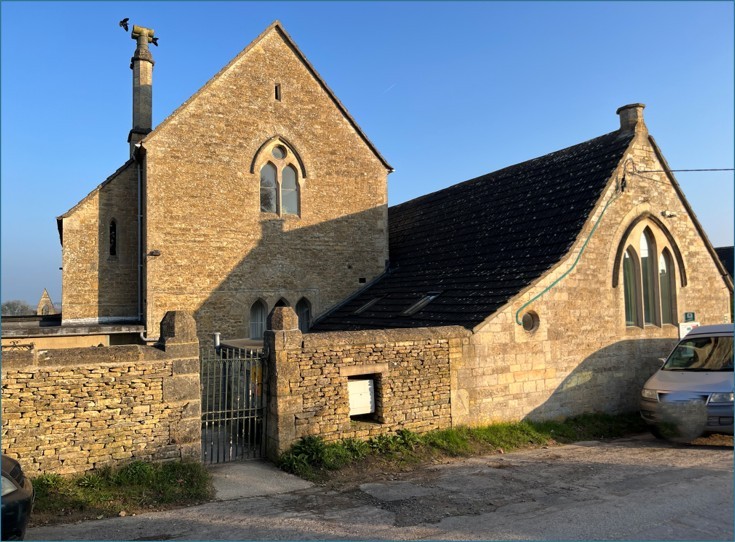
Chalford Hill British School opened in 1874 and some children whose parents preferred them not to have a Church education moved them there. After the LEA took over the running of the school a report was produced in 1910, which found many faults with the condition of the buildings. The educational standard had also not improved. But then in 1888 William Ellis arrived as head teacher and stayed for a lengthy period, during which a clear ambitious curriculum for all subjects was recorded in the log book and standards improved. After Ellis, another long term head teacher, Mr Marmont was appointed and the school is recorded during the tenure of both these dedicated heads as winning garden prizes, putting on plays, and having success at both music and sport.
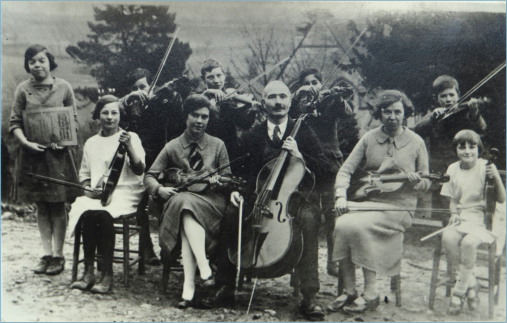
Falling attendances in the 1920s made it inevitable that one of the local National schools would have to close. For a while it was in the balance whether this would be France Lynch or Bussage, but ultimately it was simple geography and the closeness of Chalford Hill to France Lynch that led to France Lynch closing in 1931.
After closure the building was used for teaching Sunday School and in WW2 to house evacuees. Today it has a new life as The Hall on the Hill.
Jim Bocock then spoke about Chalford Hill British School. Before 1870 there was a British school (intended for the children ‘of every religious persuasion’ rather than C of E as the National Schools were) run in the Congregational Church. Logbook entries from the time paint a rather dismal picture of the place – ‘the children’s behaviour…is that of a little rabble.’ ‘Order is very unsatisfactory.’ ‘The school is in a dreadfully backward state.’ The school closed in 1871 and there was an immediate call to elect a school board and try to build something better.
Between 1871 and 1874 the community rallied round to raise money, with local industrialist William Dangerfield personally donating £300. Chalford Hill British School was opened in 1874, and the original schoolroom can still be seen at the heart of the modern building today. Unfortunately, the good advice given by HMI about appointing the right Head seems to have been ignored, and with five masters coming and going in quick succession, the school’s performance was poor. HMI were scathing – ‘There is a lack of order and disciplinary power’ and ‘Infants are backward and receive little or no attention.’
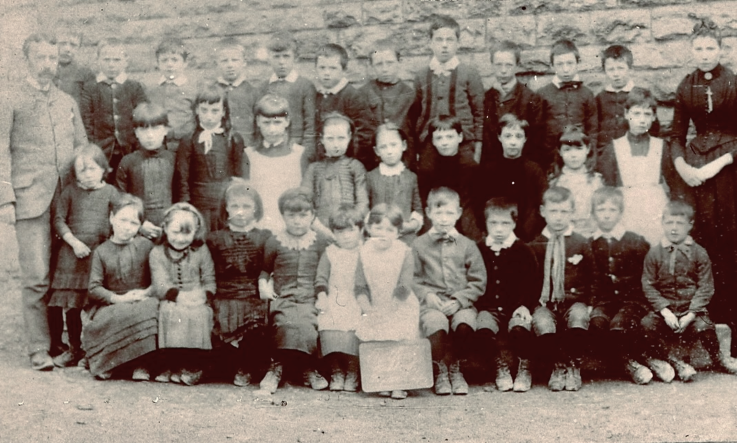
Then in 1884, Frank Applin Webb was appointed and everything changed. Webb stayed for nearly 40 years and transformed the school. He had inspired ideas such as a magic lantern show for those with perfect attendance, which resulted in the Attendance Officer writing in 1898, ‘there are no irregular absences to report,’ a highly unusual comment for a local school at the time.
Under Webb’s guidance the school developed its own traditions – Empire day celebrations, the prize-winning school gardens, the teaching of cookery and woodwork to prepare pupils for working life. Educational standards improved and the school sent its first scholarship pupil to the Grammar School in Stroud.
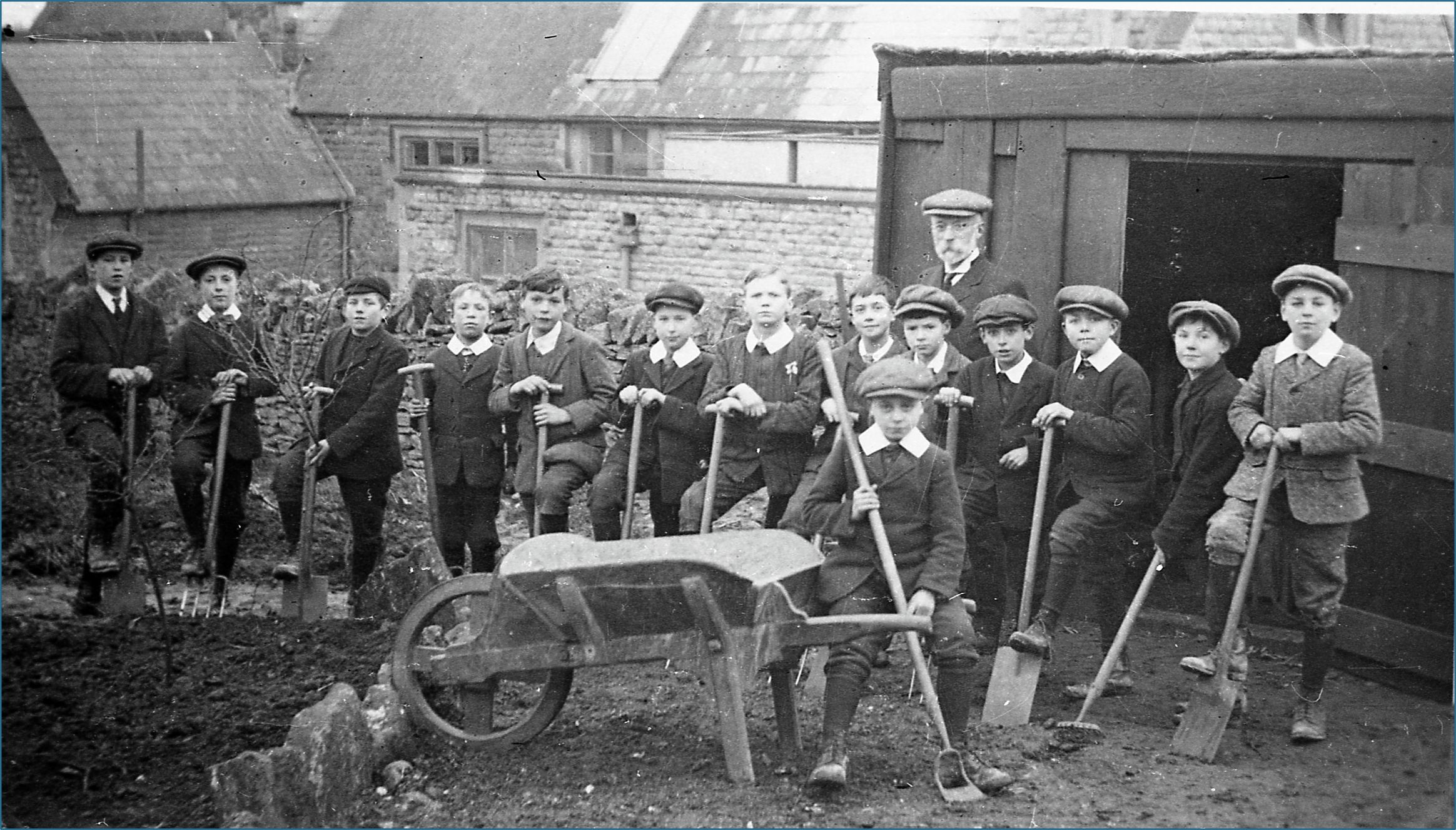
The school also became a genuine part of the local community with the buildings used by – among others – the Chalford Band, the Temperance League, the WWI Volunteer Training Corps (of which Mr Webster was a member), Chalford Young Men’s Mutual Improvement Society and the Parish Council.
Mr Webster retired in 1923, but the school continued along the path he had set out for it all through the 20s and 30s and right up to the eve of the Second World War.
What happened to our remaining schools after 1939? You’ll have to come to Part 2 of this presentation in 2027 to find out!
Wednesday 18 March – The History of Gloucestershire’s Inland Waterways – Tony Conder
A good crowd gathered on Wednesday 18 March at the Church Rooms to hear Tony Conder speak on Gloucestershire’s Inland Waterways.
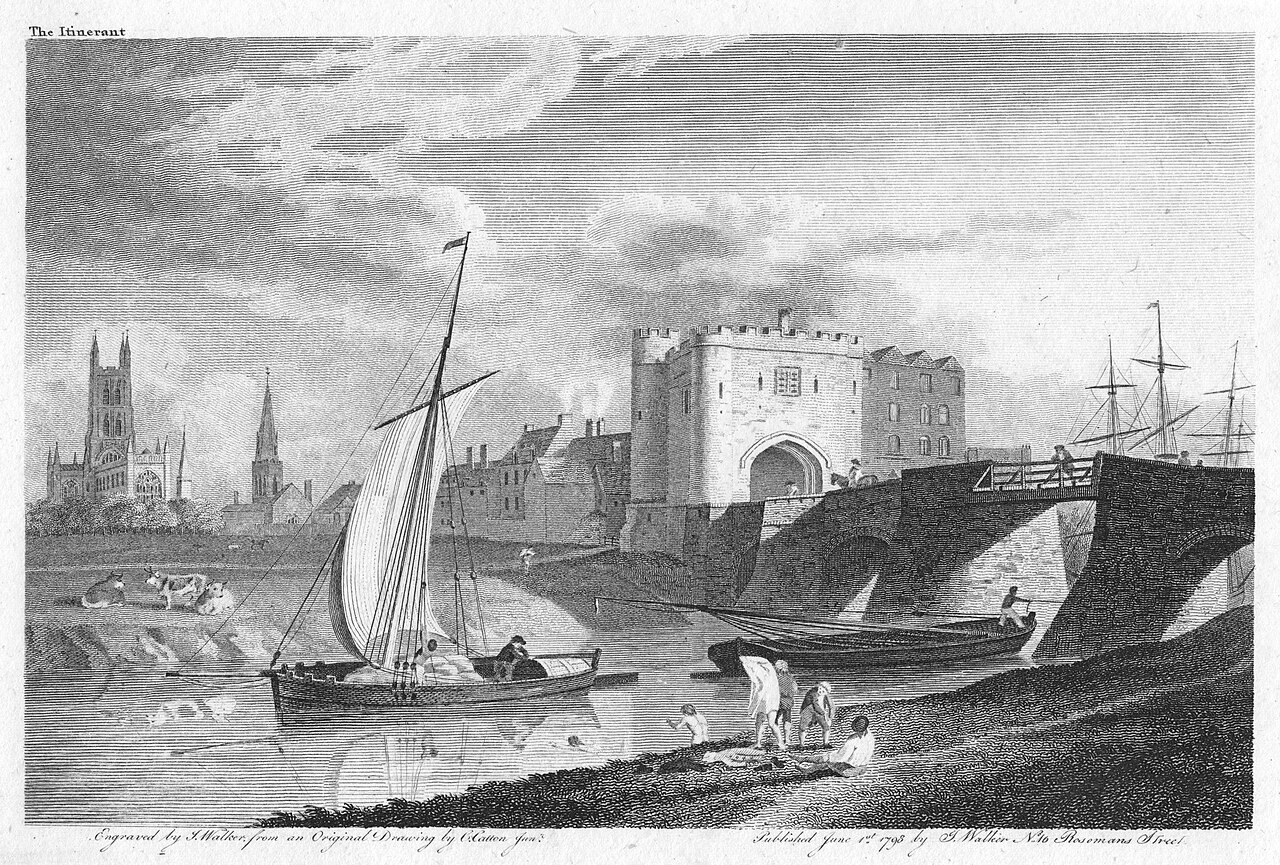
From a drawing by C. Catton, Public domain, via Wikimedia Commons
Tony started by explaining the relatively limited waterways transport in the county that was possible before the coming of the canals in the late 18th century. The main rivers in use were the Severn, the Wye, the Lugg and the Avon. Ships coming up the Severn to Gloucester had to negotiate the tides as well as a series of bends and this resulted in Gloucester being way less developed than Bristol, much further down the river, with Newnham in Severn as the main local port.
Tony went on to describe the many schemes that were proposed across the county for canals to join up existing rivers, make a ship canal to Gloucester and in some cases take waterways where none currently existed. He showed us some of the plans for these that are in Gloucestershire Archives and described some of the reasons why many of them failed. Often this was simply as there was no sufficient water supply to keep a canal full. The first early plans for a Stroudwater Canal were held back by the objections of the mill owners and their existing water rights.
An early attempt, known as Kemmett’s Canal, had proposed using cranes at each mill to transship goods rather than having locks, thus getting around the main objections of the mill owners but it proved impractical in operation and was not completed.
The next attempt proposed to use new canal sections to bypass the mills rather than simply making river improvements and it was given approval in 1774. Finally in 1779 the 8 miles and 12 locks of the Stroudwater Canal were constructed and the canal was opened. A further Act was passed in1783 to construct the rest of the east-west link between the Thames and the Severn and by 1785 it had reached Chalford. Connection to the Thames itself took a little longer as the Sapperton Tunnel had to be built first, but the link was finally made in 1789.
So-called “canal mania” in the 1790s saw the revival of the proposal to make Gloucester a sea port by constructing a ship canal, of some 16.5 miles in length, with 2 locks. Despite running out of money halfway through, and many arguments between parties with vested interests over the route, it was finally completed after 34 years, emerging into the river at Sharpness. Tony described how this canal changed the nature of the City forever, from a medieval market town to a powerhouse of the Industrial Revolution.
In 1827, the ship canal carried about 100,000 tons of goods, but by 1905 this had risen to over a million tons. Originally built as the Gloucester and Berkeley Canal, today it is known as the Gloucester & Sharpness Canal
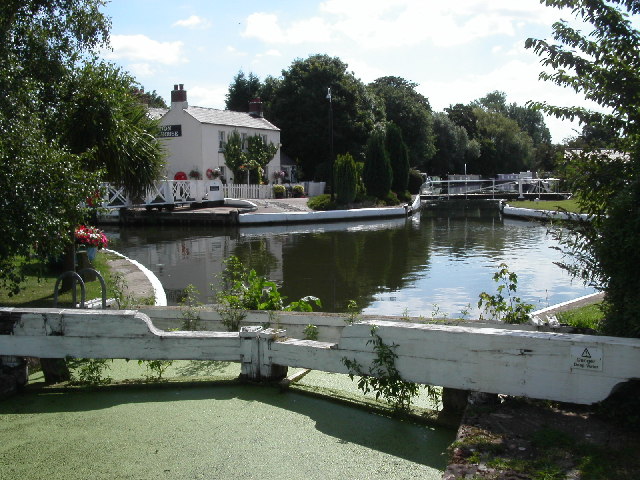
Vincent Jones (Wikimedia Commons)
The Stroudwater and Gloucester & Berkeley Canals cross at Saul Junction, which required some quite clever engineering during the construction of the ship canal as they were at different levels, as Tony explained with maps and plans. It remains the only crossing of two independently owned canals in the country.
Tony then went on to describe improvements made to waterways in the Forest of Dean. Although some improvements were made to the Wye itself, the only canal constructed here was the Hereford & Gloucester. This had several small branch canals, for example to bring in coal from Newent, but most only lasted a few years and were replaced with tramways and roads. We saw some examples of how some of these can still be traced today as lines on the map and faint traces on the ground if you know what you’re looking for.
One way that small branch canals did survive across the county into the twentieth century in some cases, was where they had been constructed to convey produce from a specific facility such as corn from a mill or factory, often on so-called “tub boats” which were little more than large punts. One such named example was Pidcocks Canal which connected an ironworks near Lydney with the Severn itself.
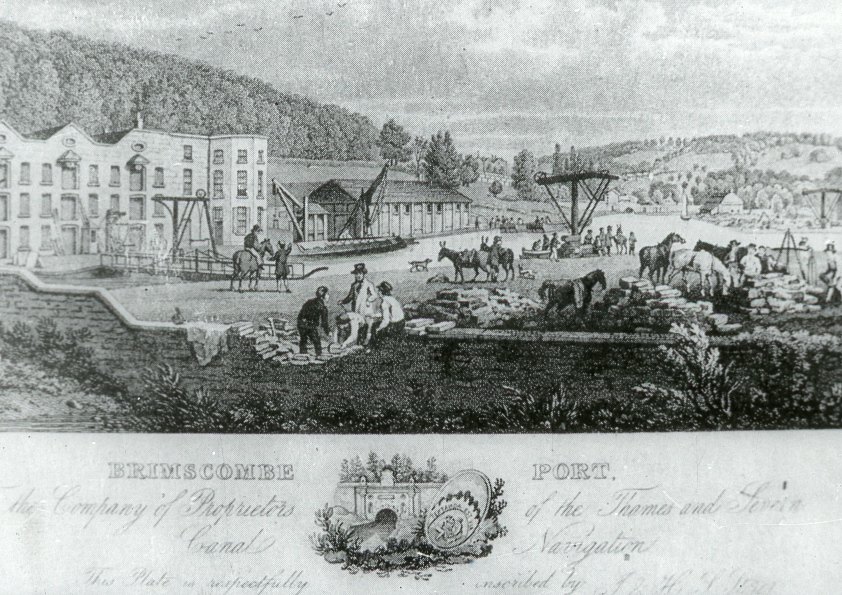
(Mike Mills Collection)
We then heard the stories of a few canals that never were. In the heyday of canals in the late eighteenth and early nineteenth centuries some truly fanciful schemes were put forward and again the drawings for many of these survive today in Gloucestershire Archives. These included the Uley Canal, which had an ambitious plan to use boat lifts instead of locks and the Central Junction canal. Both these ideas failed as there was simply no economic need for them and there was insufficient water supply to make either of them practically viable.
The ultimate decline of the canals is often simply blamed on the coming of the railways, but as Tony explained that is an oversimplification and the real story is more complex. Initially the railways and canals worked together, but then as new factories and mines were constructed, they tended to be aligned with the railways rather than with the canal. Locally, the Thames and Severn had always had water supply problems, and this became worse as time went on. The final death of water transport was caused by the motorways and the growth of road transport.
The efforts to preserve and restore our local canal network started as early as the 1970s and are continued today by the Cotswold Canals Trust. Gloucester Docks itself suffers today from significant issues with silt and the depth in the harbour is no longer sufficient for larger ships. The Canal and River Trust currently has a huge dredging plan to attempt to rectify this.
Tony covered a lot of detail in his talk, and it is impossible to reproduce it all here. If you are interested in knowing more, we recommend the following links as a start.
Canal Life – Stroudwater History
Gloucester & Sharpness Canal | Canal Map
Wednesday 18 February – France Lynch’s Hidden Graveyard – Hilary Burgess, Camilla Boon, Roger Carnt, Heather Collins
Nearly 50 people gathered at the Church Rooms on a freezing Wednesday evening with sleet falling – clearly the subject was of interest!
Five of the Committee – Hilary, Roger, Camilla, Angela and Heather have been exploring and researching the old dissenters’ graveyard at Starry Hill, France Lynch for just over a year now and at this talk, four of them presented the findings so far, and explained the history of the site.
It should be noted that the site is under the care of a charity and is normally kept locked. Please don’t try to enter the site without permission from the charity trustees. Contact us if you are interested in having access at some point.
Hilary began by showing some old maps to pinpoint the location of the site at the end of Keble Road, behind the old bus stop, forgotten and un-noticed by many. She went on to explain the origins of the dissenting movement and the various legislation, first banning and then permitting dissenting meetings. She then covered the origin and history of the site itself. It has gone by various names, with no-one now sure of the origins, but we have called it Starry Hill in this presentation.
The first chapel on the site was probably octagonal or round (no pictures survive) and was built in 1696. It quickly became too small and was replaced in the mid-1700s by a rectangular building further down the site, later known as the Old Vestry (see photo below for where we think this was located). This building was extended around 1750 to build a Sunday school adjacent to the main chapel. By the early 1800s this was also becoming too small – one meeting with a visiting preacher attracted over 3000 people and would probably have been held on the nearby Common – and plans were made for a larger building further up the hill. This became the France Congregational Church – now apartments – built in 1819.
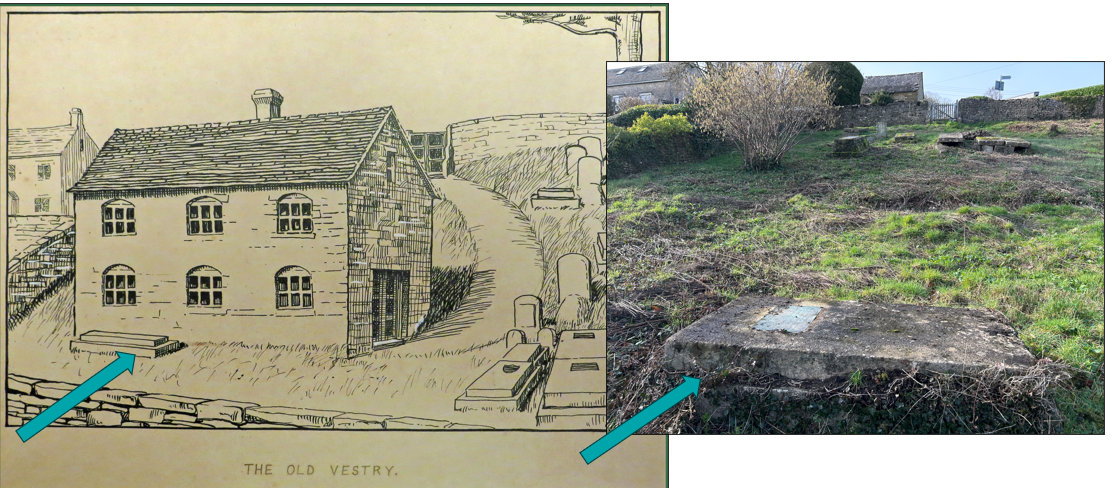
The Old Vestry was demolished so the stone could be re-used for the new building. One of the major benefactors was Charles Ballinger who gave £200, on condition that the Sunday school building on the old site be rebuilt so his family vault, formerly under their pew inside the chapel, remained inside a building.
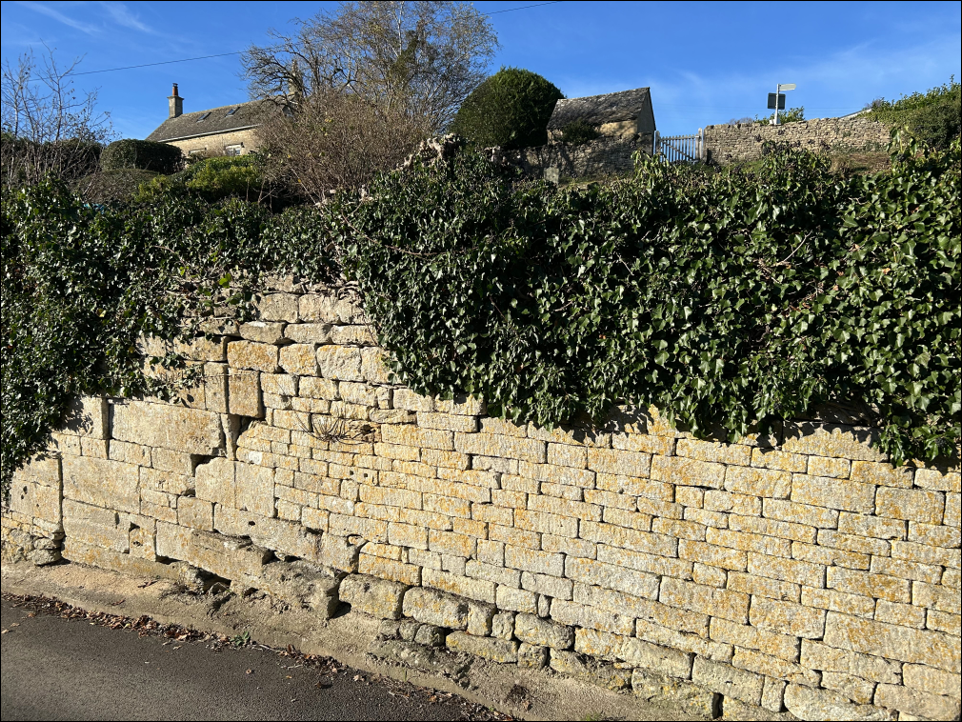
The old graveyard continued to be used throughout the 19th century, and the Sunday school was also used until the 1870s, when it too was demolished, the large, dressed stones being re-used for walls both around the old and new sites, where they can still be seen today.
Heather and Camilla each expanded on the story of one of the wealthy clothier families that became associated with the various chapels, Ballingers and Innells.
The Ballingers came to Chalford in the 18th century and quickly became major landowners, buying property from the Tayloes amongst others. At one point they owned what is now Belvedere Mill (then known as Ballingers) as well as Skaiteshill House, Frith Wood and numerous other properties besides. Ballinger bequests also set up charities that still exist and give grants today.
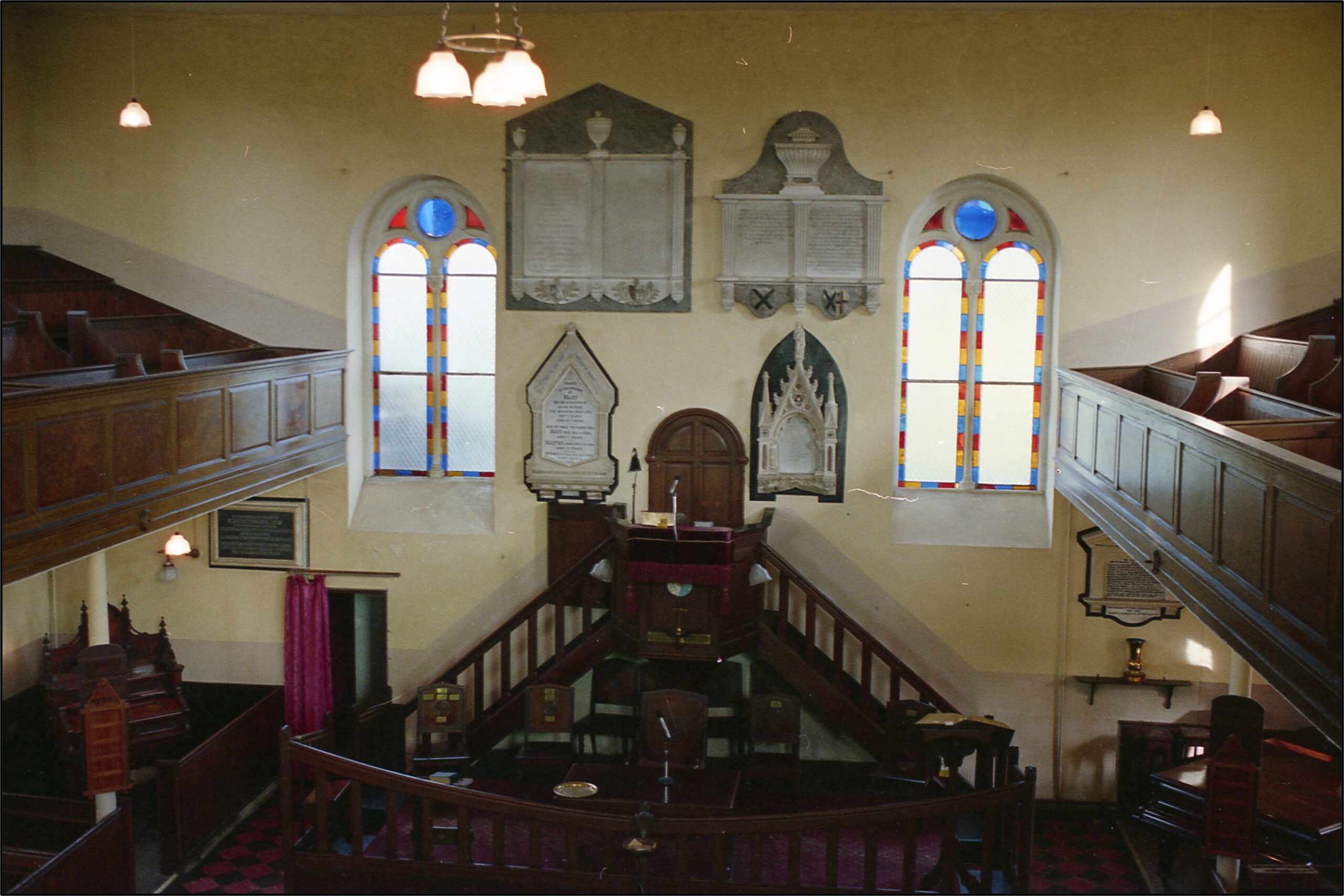
The Ballinger vault in the Old Vestry had five family burials mostly from the last quarter of the 1700s. There was also a rather splendid plaque on the wall giving all their details. The plaque was moved to the new Congregational Church in 1819 and is still in the common area of the building, but the fate of the vault is unknown and remains one of the mysteries of the site. The condition of the present day surface makes it impossible to see where it might be, although the location of the Old Vestry building seems fairly clear (see photos above with blue arrows)
The Innell family were also significant landowners and Camilla showed us some plans drawn when the canal route was proposed that named several Innells as adjacent landowners. John and Mary Innell lived at Green Court, and their son James probably added the façade in around 1810. James’s son John was declared bankrupt in the 1820s and this seems to have brought a halt to the family burials on the site.
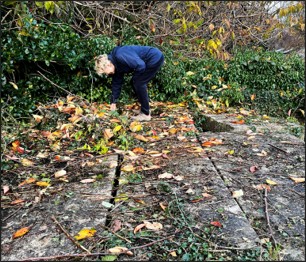
The Innell family vault in the graveyard was above ground and is still clearly visible today as a very solid structure with internal chambers. The Innell plaque, which like the Ballinger one was moved to the new chapel and still survives on the wall, mentions John and Mary and two of their sons, but it isn’t clear who was actually buried in the vault. Only one name is inscribed on the vault, “J Innell 1806”, which would fit with the death of the oldest son John. The rest of the family names, James included, were never added to the vault and the later names were not added to the plaque, probably due to the bankruptcy. From what can be seen inside the vault today looking through gaps in the outer wall, it appears empty and it is uncertain how many burials were actually made within it, or what happened to them. Unfortunately the surviving burials records are rather poor and unhelpful.
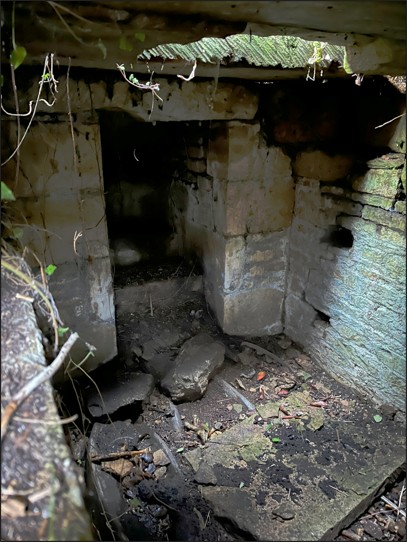
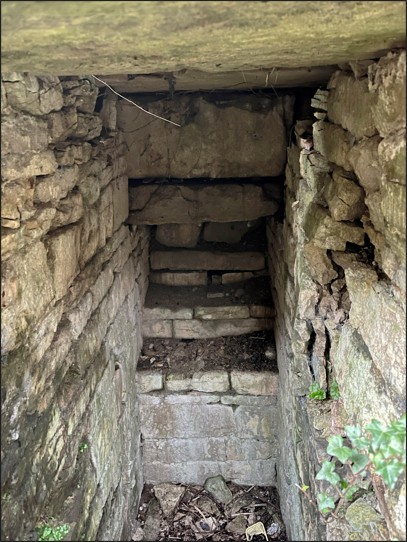
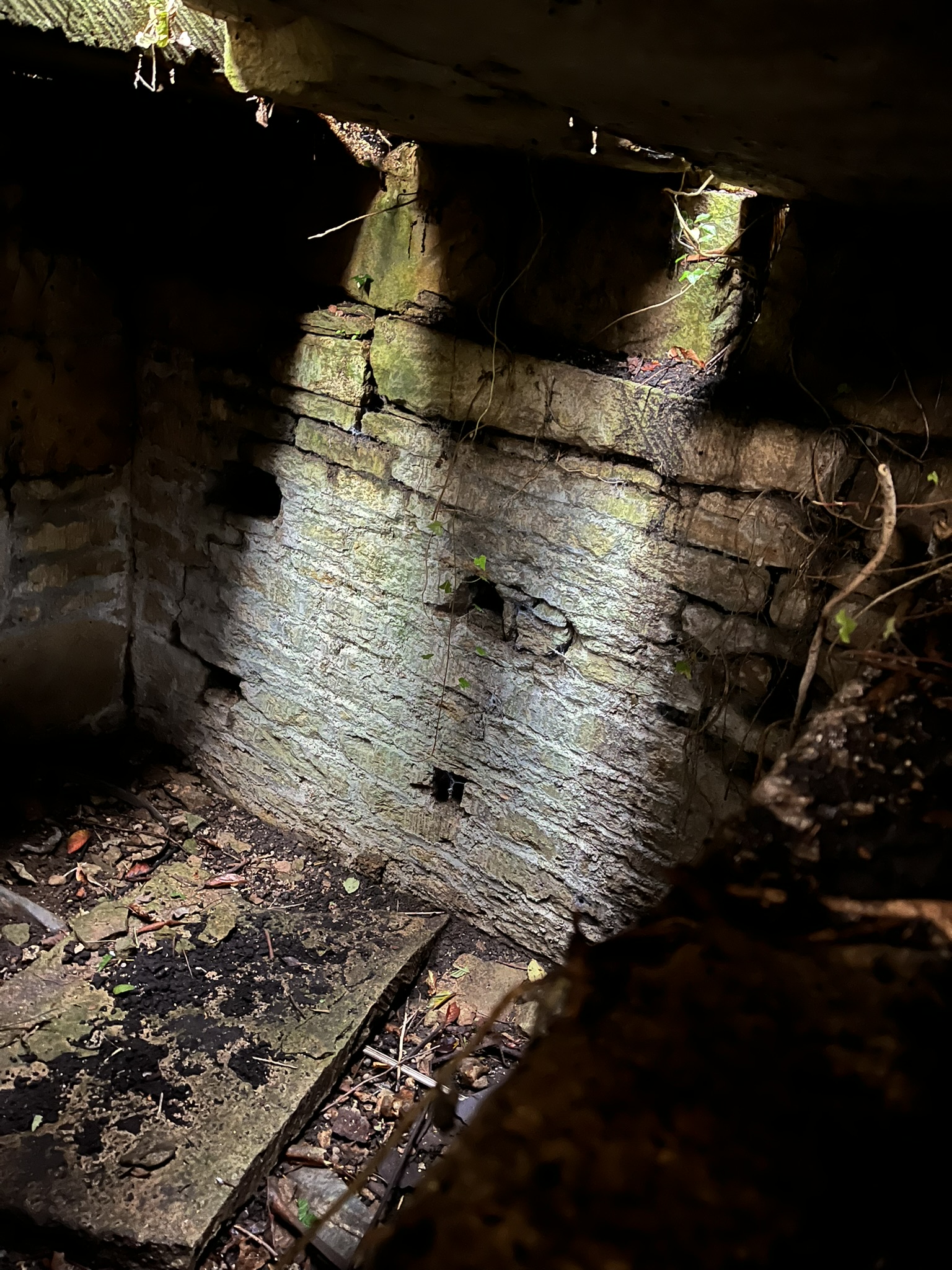
Roger and Hilary then recounted the stories behind a number of the other graves that have readable inscriptions. In researching these, we were greatly aided by a document of transcriptions made in the 1960s by a genealogical researcher, David Gardner, on behalf of the Church of Latter Day Saints. Even in the 60s, Gardner noted that some inscriptions were barely legible and other graves appeared to have never had any inscription at all. Some of the examples covered in the presentation included:
Aaron and Mary Lord. An elderly brother and sister who died in a fire in their cottage at Hyde in 1795. Aaron had inherited £2000 some years before – an enormous sum for an ordinary person at the time. He had however lived a most frugal life, commenting on being offered some cheese to eat with his bread that, “Cheese was a luxury that led men to eat more bread than was necessary.” He was said to have increased his fortune to around £4000 and some of the money was “dug out” of the cottage. A subsequent newspaper article offered a reward for the return of some of the money, which had apparently been stolen after the fire.
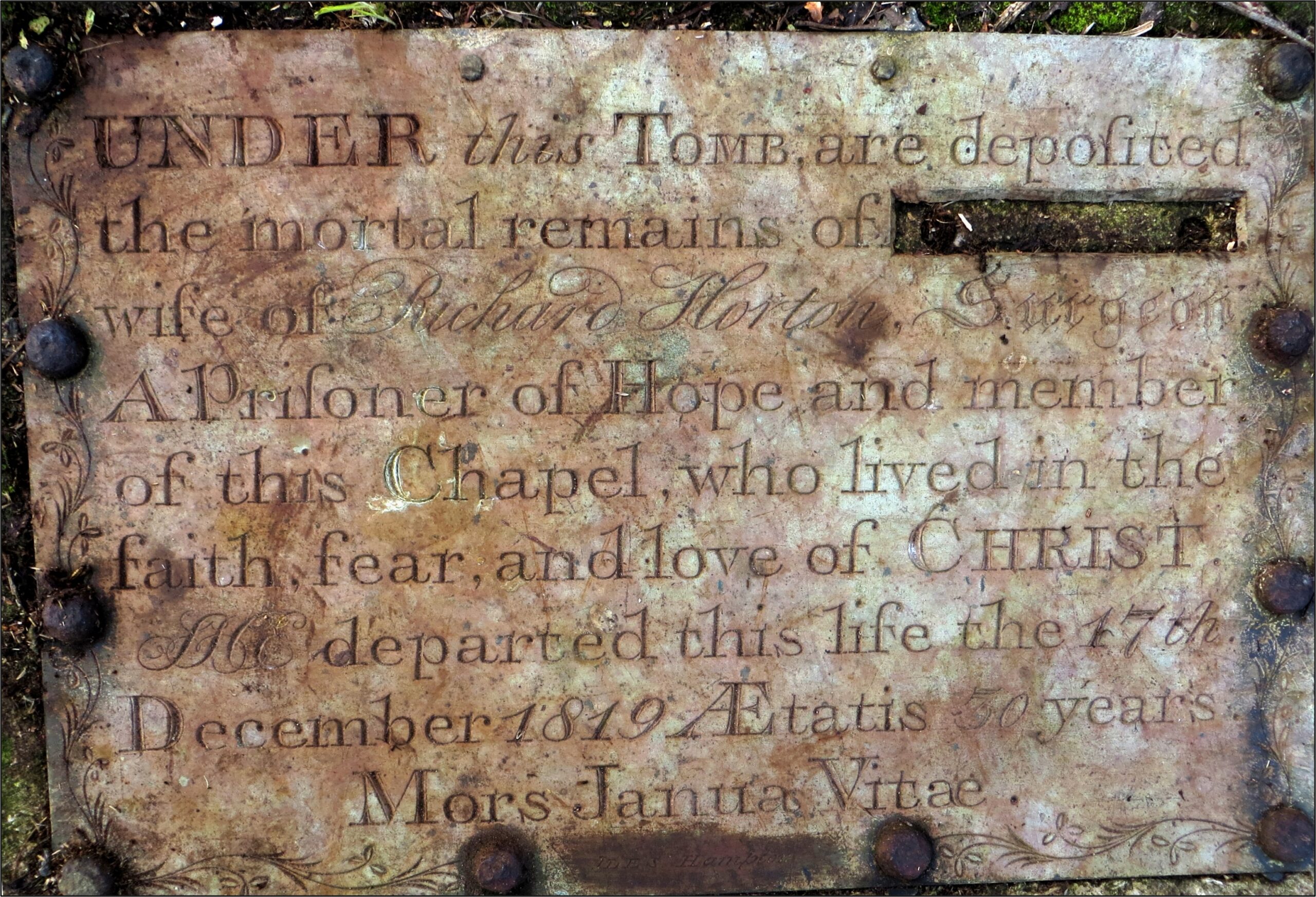
The inscription on the grave of the wife of Richard Horton, surgeon had attracted attention as the wife’s first name appears to have been cut out. Horton married Anne Elizabeth Davies, who then died in 1819. The “space” left by the cut out isn’t big enough for both her forenames, but Anne would probably fit. Horton married again three years after his first wife died. He then applied for letters of administration for Anne’s estate (she had not left a will), seventeen years after her death. Why he left it so late is a mystery we have not solved. Whether it has anything to do with the missing piece on the plaque is also a mystery! Horton died at Alma Villa, Chalford in 1862, burial place currently unknown.
Emily Reap was killed in a stagecoach crash in 1828, when returning home to Devon after staying overnight with the Rev Whitta, then the Minister of the Congregational Chapel. She had known him previously from Tiverton and he was also her executor. The owners of the coach were fined a “deodand” (under an old law which required an object responsible for a death to be forfeit to the crown, or a payment in cash made instead) of £10.
The Drew family. The Drews were a well-known family of local carpenters and builders. Their family grave includes William and Mary Drew, their daughter Ann who died aged 15 and their other daughter Virtue, who after the death of her husband was a grocer and draper. Their son Geroge who built the Chalford Wesleyan Chapel and Vale House was buried in an elaborate tomb in Christ Church.
Originally, we had thought the last burials in this graveyard were in the late 1800s, but the discovery of a newspaper article told us otherwise. The Stroud News reported in 1908 that the burial of George Goodship had taken place in the graveyard, noting that it was “quite a strange event and even the oldest inhabitant of Chalford had never witnessed a similar interment.”
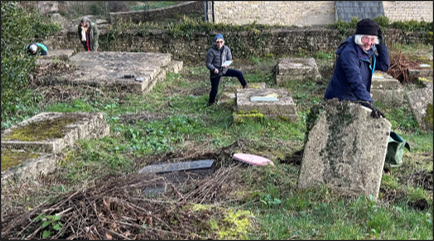
There are still clearly more fascinating stories to tell and potentially other graves to uncover or find inscriptions for, as we have not yet found all the graves that David Gardiner found in the 60s. Some inscriptions may have been eroded by time, especially where they were not on metal plaques, but we also have not solved the mystery of the Ballinger vault or why the Innell vault appears empty.
As a postscript several of the longer term residents of France Lynch recalled exploring the graveyard as children when it was more accessible, and either seeing skulls or finding bones, including one story of a skull being brought into school and another of a dog coming home with a bone!
We hope to present more detail of these findings along with further pictures at our planned drop in afternoon on Saturday 3 October – further details to follow.
Wednesday 21 January – MOD War Detectives – Alexia Clark
A good crowd on a miserable rainy Wednesday evening to hear Alexia Clark talk about the work of the MOD War Detectives based at Imjin Barracks in Gloucester.
Alexia began by telling us about the work of the MOD’s Joint Casualty and Compassionate Centre (JCCC), which the Commemorations Team – the War Detectives – is a part of. More details here
The team’s main aim is to identify the missing British casualties of the two World Wars and the Korean War. To put this into context, around 1.2 million British military personnel were killed in WWI and nearly 527,000 have no known grave. Of these, around 184,000 are buried in graves with no name on the headstone (“Known to God”). The figure does include those lost at sea, but it’s still a staggering number for those with no known resting place and was a source of great distress to many families at the time.
Alexia briefly explained how the battlefields were cleared and the bodies of the dead recovered from temporary wartime cemeteries and concentrated in larger cemeteries by the Graves Registration Units after WWI ended. This was a meticulous process involving the use of grid searching using wartime trench maps, the recovery of artefacts (such as badges, buttons, military equipment and personal possessions) that might help to identify the casualty, and detailed recording. This article gives some further details of what happened when a soldier was killed and how the battlefields were cleared What happened to a soldier who died? – The Long, Long Trail
© Crown Copyright
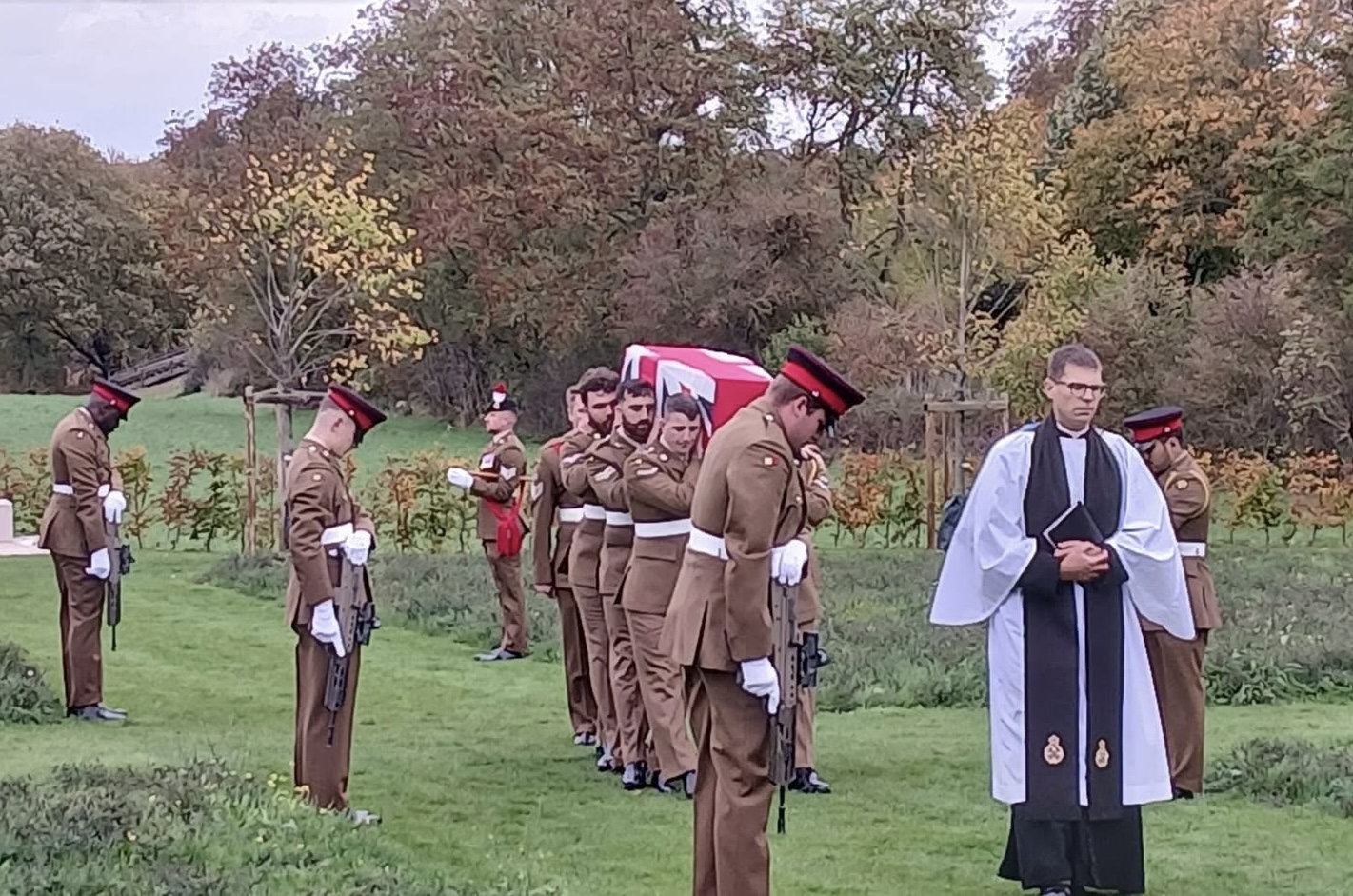
Private Arthur Cook, Private Robert Cullum, Private John Fraser and Private William London were all from Grimsby originally, and though they came to army service at different times, they all found themselves part of the final days of the Battle of Arras in May 1917. All four men were part of the same Lewis Gun Crew, and they died together on 5 May 1917 – Fred Blakey MM was the fifth member of the crew, and he survived albeit severely wounded. Ptes Cook, Cullum, Fraser and London were listed as missing, and following the war their names were added to the Arras Memorial. A full military funeral for the men was held in October 2025, led by Padre Joe Roberts of 1st Bn The Royal Anglian Regiment (the successor unit to the Lincolns), and the bearer party and firing party were also made up of serving soldiers from 1st Bn The Royal Anglians. Artefacts such as shoulder titles that had been found with the men were presented to the families. New headstones with the names and inscriptions chosen by the families have been erected by the Commonwealth War Graves Commission (CWGC).
© Crown Copyright
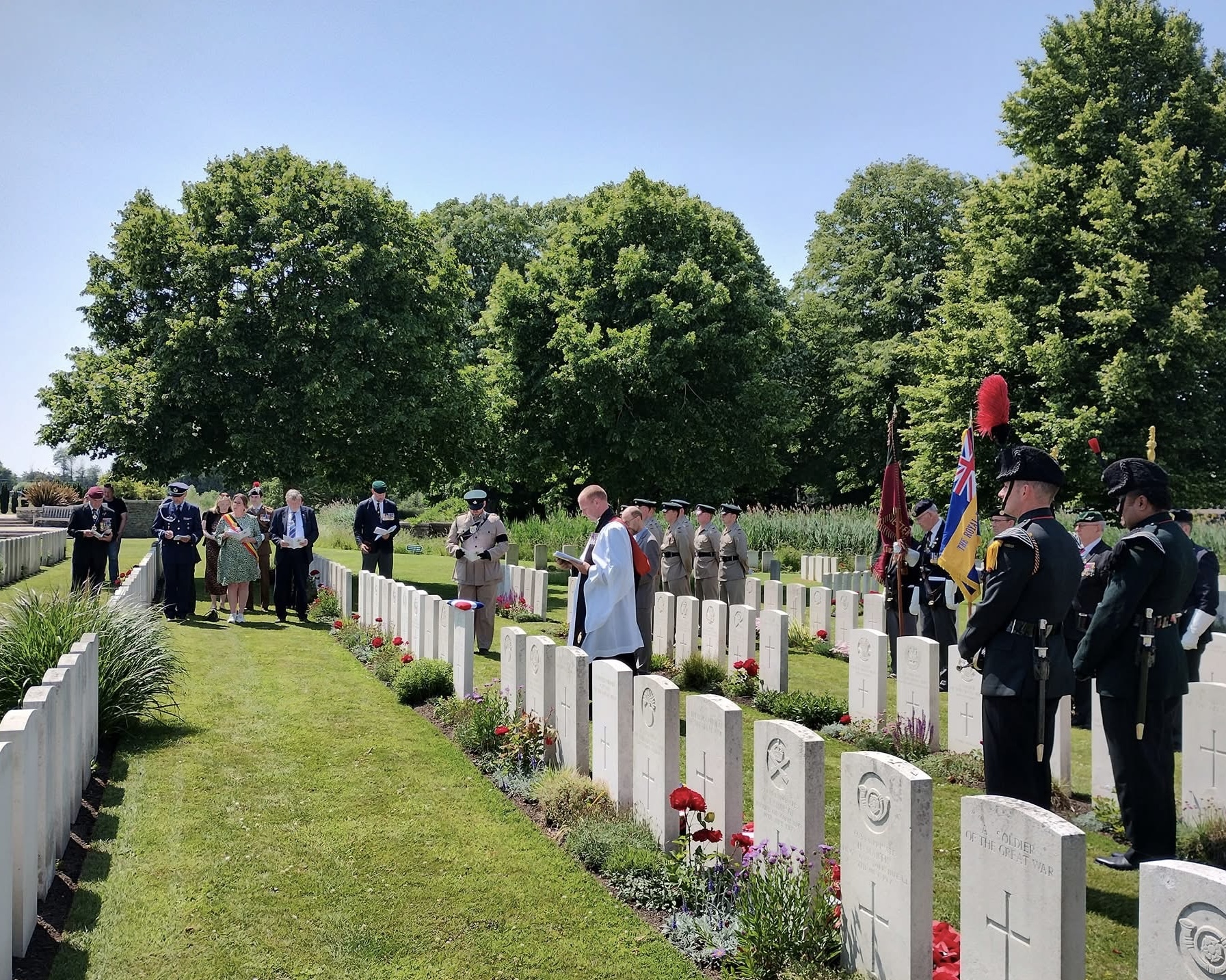
Captain Ernest Blencowe of the Dorsetshire Regiment, died defending The Bluff in February 1916. His grave was rededicated in June 2025, with a new headstone in the presence of two of his great-grandchildren, accompanied by a young historian who has studied the regiment and Captain Blencowe’s story extensively. The service was held (as those in Belgium apparently usually are) in the presence of a large crowd including the Mayor of Ieper, the Belgian Defence Force and the Royal British Legion. It was led by Padre John Storey of 5th Bn The Rifles (successor Regiment to the Dorsets, who by coincidence had attended the same school as Captain Blencowe) and supported by serving personnel from 1st Bn The Rifles who flew in specially from Cyprus for the occasion. Buglers from The Band and Bugles of The Rifles were also present.